






A row of illuminated white colonial houses along a road photographed at dusk.

Furnace Repair in Denton, MD

Tell us about the job

Takes about a minute. No obligation.

RepairFurnace or heatingCaroline County, MD
Step 1 of 2

What ZIP code is the job in?

September is when a furnace in Denton gets switched on after sitting idle since spring. That first run in October is when a weak igniter or a clogged flame sensor tends to show itself. The furnace will carry the house through April, about seven months straight, so whatever is wrong in week one doesn't get easier by staying quiet. If yours is short cycling or not firing right at the start of the season, that's the usual pattern, not a sign of anything unusual about this house.

7 months
October through April, your furnace is on duty
28°F
the average winter night it heats against
9 winter storms
in ten years, the nights a failure hurts most
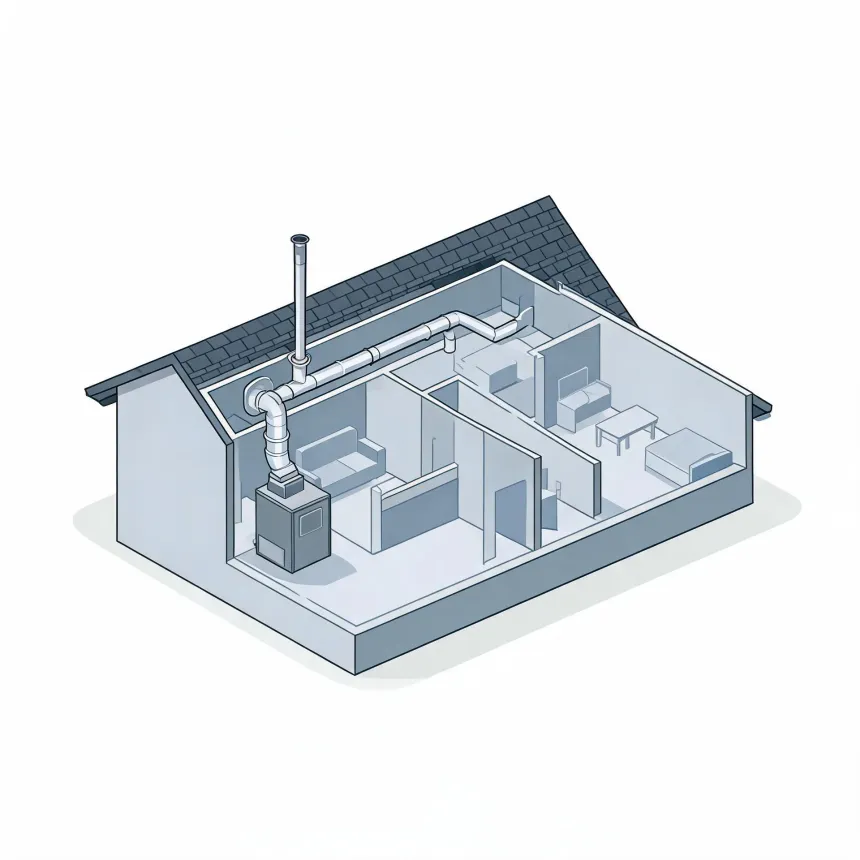
Isometric cutaway illustration of a single-story house showing interior rooms with furniture and a furnace connected to ductwork and a vertical flue pipe extending through the roof.
Your furnace works hardest from November through March.

NOAA nClimDiv, 1991–2020 normals

Denton furnaces run seven months straight once they start.

Whatever's wrong in week one stays wrong through April, so get it fixed now.

Half the homes in Denton were built in 1981 or later, and the furnace is usually worth fixing

Half the homes here were built by 1981
Heat runs October through April
Winter nights average 28°F
A furnace running wrong costs you every month it's ignoredElectricity in Maryland ran $52.34 per million Btu in 2024.

If your furnace came in when the house was built, it hasn't had time to wear out on its own. Most early trouble is one part failing, an igniter or a flame sensor, not the unit itself giving up. Ask the contractor to find exactly what's failing before anyone talks about replacing it. A system that's run fine up to now usually just needs that one thing fixed to get through this winter.

Fix it now, not after a winter of paying for it

A furnace that's cycling wrong or not firing clean runs that way every time it kicks on, and electricity in Maryland isn't cheap. Get the actual part diagnosed now and it's a small fix. Leave it running wrong all winter and you pay for that part anyway, bit by bit on every bill.

Find a contractor
A man in a dark T-shirt, brown work pants, boots and a cap, seen from behind, climbs concrete steps toward a dark blue front door while carrying a worn canvas tool bag, with a potted shrub beside the entry.
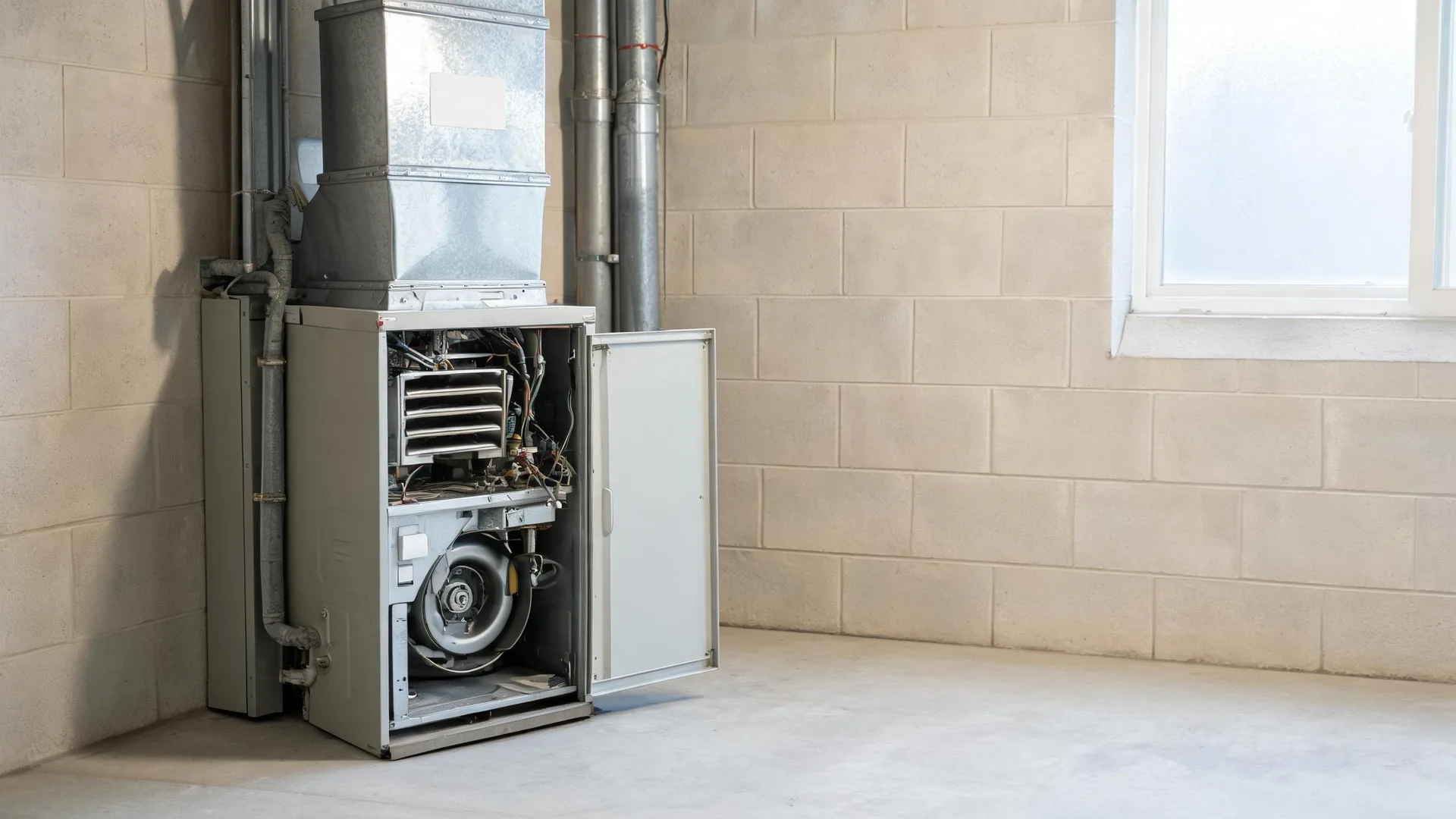
A gray residential gas furnace installed in an unfinished basement, connected to sheet-metal ductwork and PVC pipes.

Small problems don't stay small once the furnace is running daily

A cracked heat exchanger stays small as long as the burners fire the way they should. Keep running a furnace with a bad igniter or a dirty flame sensor and it starts short cycling, and every start and stop flexes metal that's already stressed. A blower running on a failing motor bearing will keep pushing air until the bearing seizes, and then you've lost heat entirely instead of just dealing with a noise. Soot building up on a cracked exchanger or clogged burner doesn't blow away on its own, it packs in tighter each time the system fires. None of that reverses itself by waiting. The part that's struggling in week one is doing the same job, under the same strain, on the thousandth cycle as it was on the first.

The symptom doesn't tell you the answer, the part does

A furnace that won't light and one that's near the end of its life can show the exact same symptom. A failed igniter or a stuck flame sensor is a cheap, fast fix no matter how old the furnace is. A cracked heat exchanger is a different conversation entirely. The symptom is just what gets you to call someone. The part underneath it is what decides what they should tell you to do.
A contractor should name the part before naming a price

If someone wants to talk replacement before they've opened the cabinet and tested anything, that's backward. A proper diagnosis finds the specific part that's failing and checks what else is wearing near it. Most furnaces fail one part at a time, not all at once. Replacement makes sense once chasing failures costs more than starting fresh, not before anyone's actually checked what's wrong.

Most furnace failures trace back to a handful of parts, not the whole unit. The igniter is the one that goes first in a lot of homes, since it heats up and cools down every single cycle and that stress wears it out over time. The flame sensor fails a different way, it just gets a coating of residue on it until it can't tell the furnace a flame is there, so the system shuts itself down as a safety measure. Blower motors fail at the bearing, and you'll usually hear that coming as a grinding or squealing before it quits outright. A cracked heat exchanger is the one that matters most, because it's the barrier between the combustion gases and the air moving through your house. Pressure switches and limit switches fail less often, but when they do, the furnace usually won't start at all rather than run poorly.

A diagnostic starts before the cabinet comes off. The contractor should ask what the furnace is doing, whether it's failing to light, shutting off early, or running but not heating, because that narrows things down before a single tool comes out. Then the covers come off and the igniter gets looked at first, either glowing to full brightness or not, no guessing involved. The flame sensor gets pulled and checked for a coating, and often cleaned on the spot to see if that alone fixes it. Pressure switches and limit switches get tested with a meter, not a guess, since a reading either shows continuity or it doesn't. The heat exchanger gets inspected last and most carefully, because a crack there changes the whole conversation. A contractor who does this in order, instead of guessing at a part or jumping to replacement, is the one actually finding what's wrong instead of hoping they're right.