





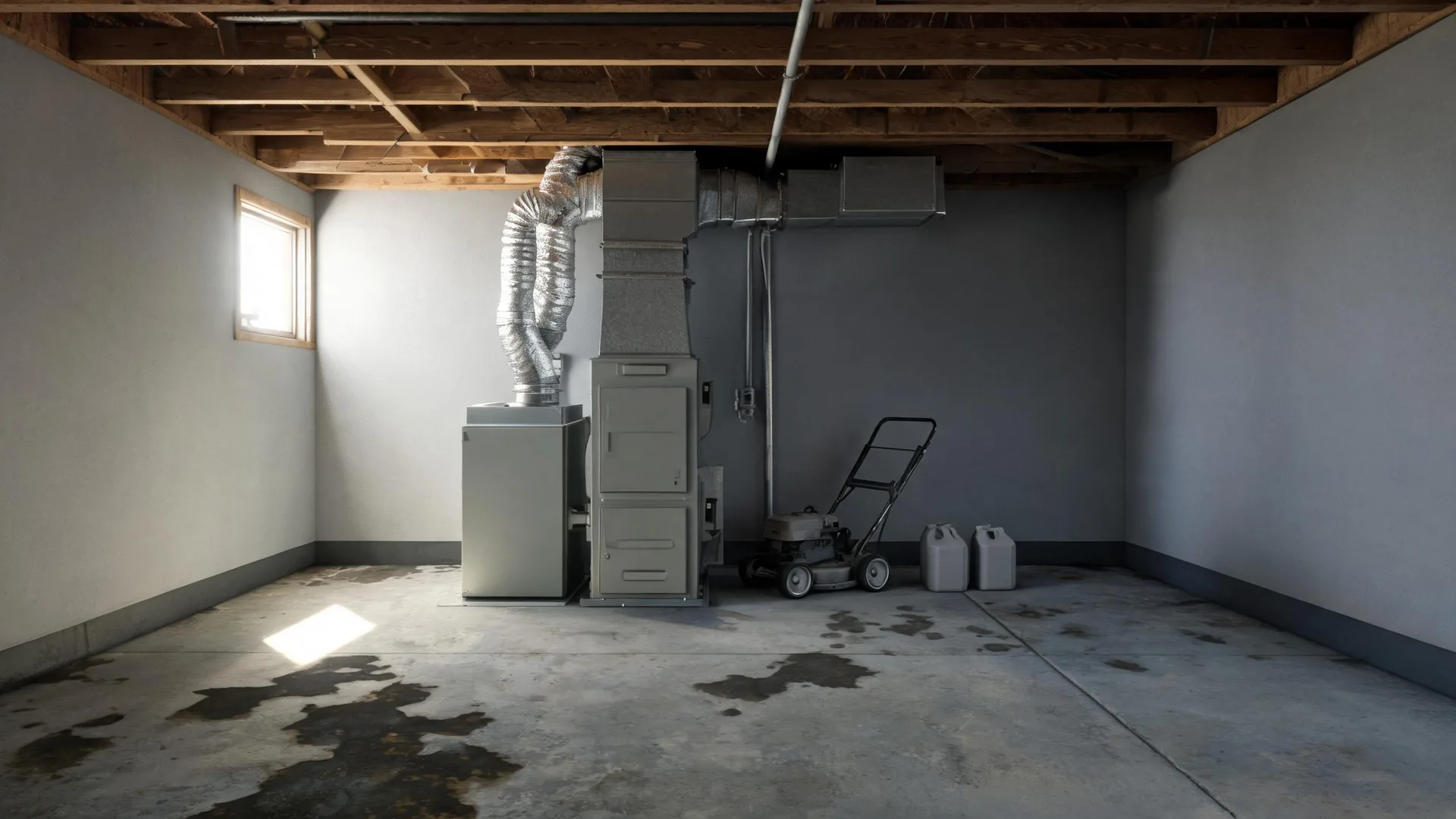
A gas furnace with sheet-metal ductwork and PVC pipes installed in an unfinished basement.

Furnace Repair in Columbia, MD

Tell us about the job

Takes about a minute. No obligation.

RepairFurnace or heatingHoward County, MD
Step 1 of 2

What ZIP code is the job in?

September is worth a look before heat season starts here. Furnaces in Howard County run from October through April, about seven months straight once they get going. Whatever was borderline last spring, a weak igniter, a flame sensor with buildup on it, a blower motor starting to strain, tends to fail in the first cold snap rather than in the easy months. That's just when the system finally gets asked to work. If your furnace struggled at the start or end of last season, the same part is still in there.

7 months
October through April, your furnace is on duty
26°F
the average winter night it heats against
22 winter storms
in ten years, the nights a failure hurts most
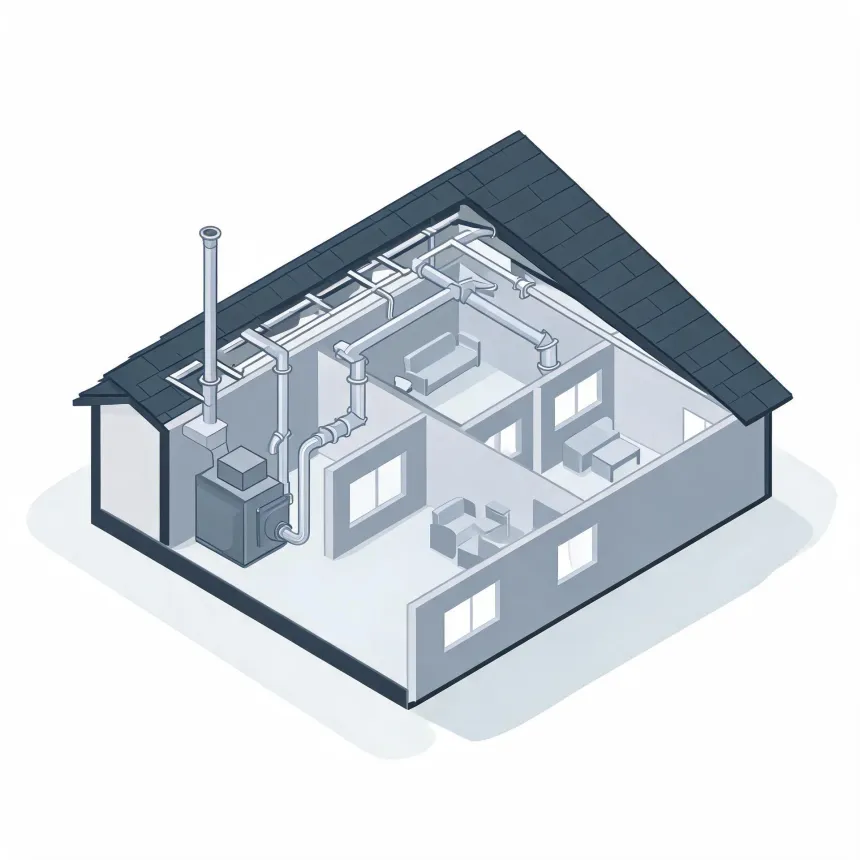
Isometric cutaway illustration of a single-story house showing interior rooms, a furnace unit with flue pipe, and branching ductwork running through the ceiling space under a dark shingled roof.
Your furnace works hardest from November through March.

NOAA nClimDiv, 1991–2020 normals

Furnace trouble in Columbia doesn't come from the cold snap that finally shows it.

At 26 degrees most nights in January, a furnace that was already weak has nowhere left to hide.

A furnace running October through April on Maryland's electric rates costs more every month it runs wrong

Heat runs October through April
Winter nights average 26°F
22 winter storms from 2015 to 2024
A newer furnace. Worth fixing.Half the homes in Howard County were built in 1989 or later.

A furnace that short cycles, or one limping along on a dirty blower wheel, pulls more power to put out the same heat. At $52.34 per million Btu, that difference shows up on the bill before it shows up as a breakdown. Waiting until the furnace quits outright just means paying the higher rate longer first. Getting a contractor to find the actual cause now, rather than after a cold snap forces the issue, is the cheaper way through the rest of the season.

Fix it right. This furnace has years left in it.

A furnace with that much life left is worth getting fixed properly, not just patched until it quits. Get a contractor out to find the actual cause before the next cold snap finds it for you.

Find a contractor
A gray residential gas furnace installed in an unfinished basement, connected to sheet-metal ductwork and PVC pipes.

The furnace tells you before it stops

A furnace gives warning before it quits. The burners take longer to catch, or they catch with a bang instead of a quiet whump. The blower runs but the air coming out feels cooler than it should. It cycles on and off more often than it used to, never quite satisfying the thermostat before it shuts down again. Sometimes it's a smell, something dusty and hot the first time it fires after sitting all summer, or something sharper that doesn't go away after a few minutes. A furnace that's been running rough for weeks and finally won't start at all isn't a new problem. It's the same one, further along.

Check the thermostat first

Make sure it's set to heat, not just on, and the temperature is set above room temperature. Check the batteries if it has a screen that's dim or blank. People call about a dead furnace and find out the thermostat lost power.
Look at the filter and the switch

Pull the filter and hold it up to a light. If you can't see light through it, that's choking the airflow and the furnace can't keep up. Then check the power switch near the unit, it looks like a regular light switch and gets bumped or turned off during other work nearby. Also check that the breaker hasn't tripped.

Most furnace failures trace back to one of a few parts, not the whole system giving out. The igniter is the usual one. It's a thin strip that heats up to light the gas, and it weakens a little every time it cycles until one day it doesn't get hot enough. A flame sensor works differently but fails the same way, coated in buildup until it can't tell the furnace a flame is there, so the system shuts itself off as a safety measure. The blower motor goes a different route, wearing out on its bearings after years of running, getting louder and weaker before it quits. A clogged filter isn't a part failing, but it's often what pushes a weak part over the edge, since the furnace has to work harder to move the same air through. None of these mean the furnace itself is bad. They mean one piece inside it finally wore through.

A repair makes sense when the failure is one part, and that part is ordinary to replace. Igniters, flame sensors, capacitors, these wear out on their own schedule and swapping one doesn't say anything bad about the furnace around it. What changes the answer is the cabinet itself, the heat exchanger cracking, or a string of different parts failing one after another over a couple seasons. That pattern means the whole furnace is reaching the end, not that it keeps having bad luck. Age matters less than how it's aged. A furnace that's been dependable until now, with one clear cause for the trouble, is usually worth fixing. One that's needed a repair every year, each time something else, is telling you where this is headed.