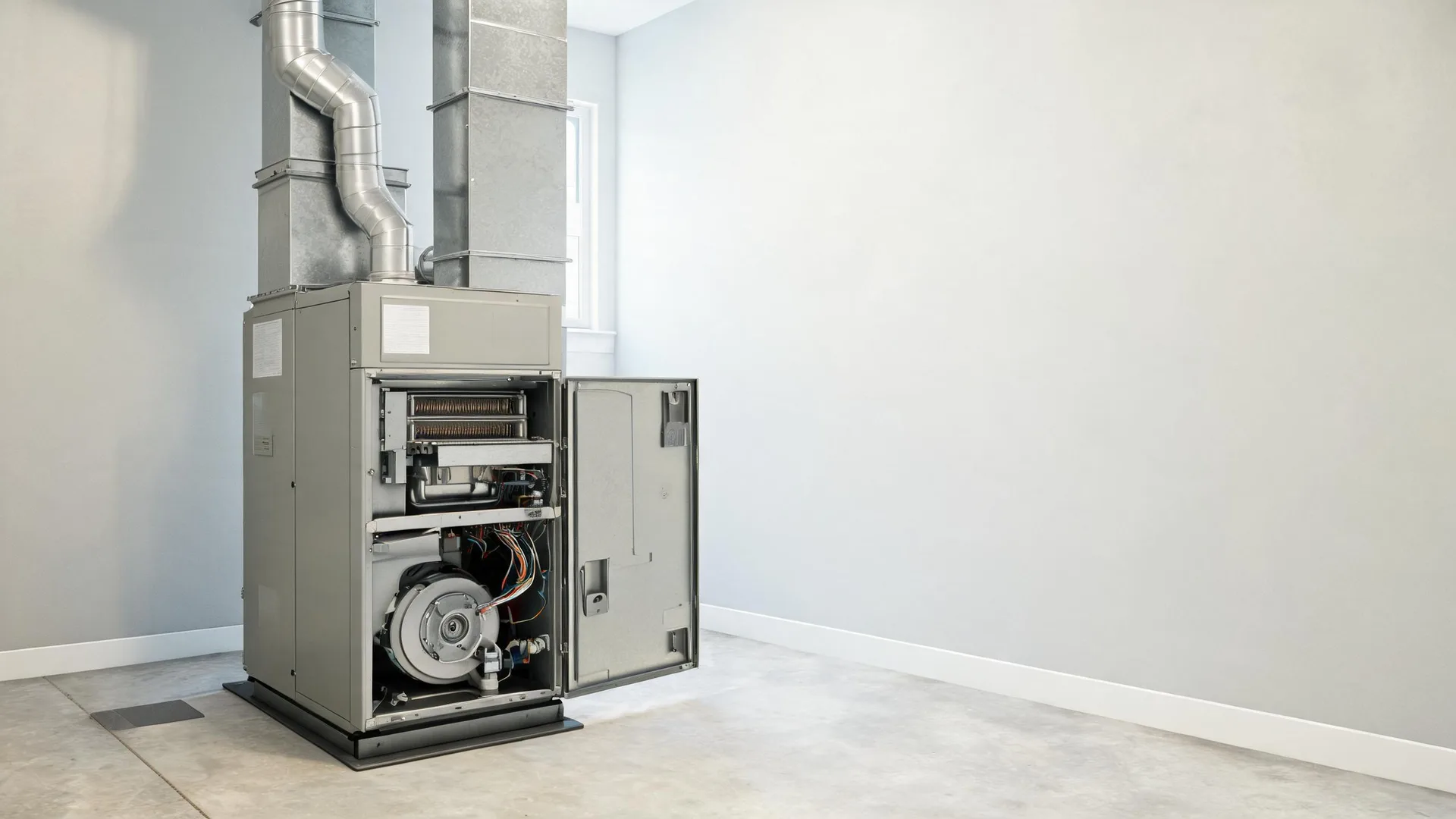
September is the month to catch problems early
Furnaces in Chestertown sit idle most of the year and start up again in October. A weak igniter or a failing blower motor often won't show itself until the system has to run.
Takes about a minute. No obligation.
Furnaces in Chestertown sit idle most of the year and start up again in October. A weak igniter or a failing blower motor often won't show itself until the system has to run.
Once heat is running through the winter, a part that was already marginal is the one that tends to fail first. Getting a furnace checked before or right at the start of the season catches that part before it quits on a cold night.

NOAA nClimDiv, 1991–2020 normals
Furnaces in Chestertown run about seven months a year, from October through April.
A furnace with a weak part can run for weeks before the cold finds it.




A furnace that's short-cycling or running longer than it should doesn't fix itself, and every week it runs that way costs more at $52.34 per million Btu than it would working right. A cracked heat exchanger, a dirty flame sensor, a blower pulling more than it should, each of these makes the system work harder for the same heat. That difference shows up on the next bill, not months from now. Getting the actual cause diagnosed stops the extra cost at the source instead of paying it all winter.
Problems tend to show up in the first weeks of the season, when the load hits a part that was already weak.
Find a contractorA dirty flame sensor doesn't stop the furnace from running, it just stops it from running right. The flame lights, the sensor fails to read it properly, and the system shuts down and tries again. Each cycle like that puts more strain on the igniter, and igniters aren't built to fire over and over in a single hour. A blower motor pulling too much current will keep moving air for a while, right up until the motor windings give out from the heat. Left alone, a small problem turns into a no-heat call, usually on the coldest night it's had to work.
An igniter heats up and cools down every time the furnace starts. That stress cracks the element a little more each cycle. The flame sensor gets a coat of carbon every time it fires, and once that coating is thick enough the furnace can't tell the flame is lit. Both are wear parts. They fail from use, not from sitting.
A blown filter, a blocked vent, or a duct that's closed off makes the furnace run hotter than it should. That trips the limit switch, which shuts the burners off to protect the heat exchanger. The furnace isn't broken in that case, it's reacting correctly to something restricting the air. Fixing the airflow fixes the shutdowns.
Most people don't notice the furnace struggling. They notice what it stops doing. The air coming out of the vents feels cooler than it used to, even though the blower still runs. The furnace cycles on and off every few minutes instead of running a steady stretch. It takes longer to bring a room up to temperature than it did a month ago. A burner flame that used to burn blue now looks yellow or flickers. The unit pops or rattles at startup when it never used to. Any one of these means something is working harder than it should to do the same job.
A diagnostic visit starts with questions before any panel comes off. A tech asks what the furnace is doing, when it started, and whether it happens on startup, mid-cycle, or at shutoff. That narrows things down before any tool comes out. Next comes a check of the flame itself, the pressure switch, the limit switch, and the amp draw on the blower motor, since those readings point straight at which part is out of spec. Static pressure in the ducts gets checked too, because a furnace starved for air throws symptoms that look like something else entirely. The control board usually holds onto a fault code from the last lockout, and that code tells the tech where to start instead of guessing. By the end, the cause should be named, not just the symptom.