




A two-story red brick house with black shutters and a gray roof sits behind a mowed lawn, framed by large deciduous trees, with a dry-stacked stone wall in the foreground.

Furnace Repair in Annapolis, MD

Tell us about the job

Takes about a minute. No obligation.

RepairFurnace or heatingAnne Arundel County, MD
Step 1 of 2

What ZIP code is the job in?

Furnaces in Annapolis run from October through April, about seven months out of the year. Overnight lows average 29°F through December, January and February, so a furnace that quits in the middle of winter here is working the way furnaces everywhere work when they fail. There's nothing about this area pushing it harder than usual. More often it's a dirty flame sensor, a failed igniter, or a clogged filter choking airflow until the system shuts itself down. Those are ordinary problems with ordinary fixes, and a licensed contractor can usually spot which one it is quickly.

7 months
October through April, your furnace is on duty
29°F
the average winter night it heats against
10 winter storms
in ten years, the nights a failure hurts most
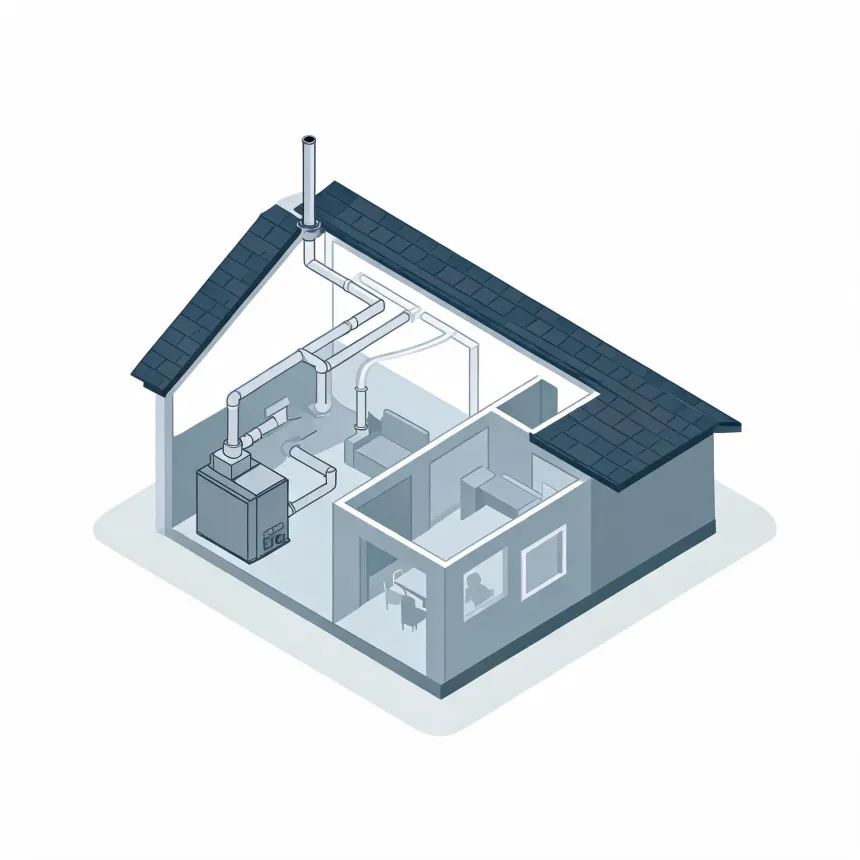
Isometric cutaway illustration of a single-story house showing interior rooms, a furnace unit with connected ductwork, and a flue pipe extending through the dark shingled roof.
Your furnace works hardest from November through March.

NOAA nClimDiv, 1991–2020 normals

Furnaces in Anne Arundel County start working in October.

September is worth a look first, before the cold puts weight on a part that's already failing.

Half the homes here were built in 1983 or later, so a lot of these furnaces still have years left in them

Half the homes here were built by 1983
Heat runs October through April
Winter nights average 29°F
Weather doesn't make your furnace failAnne Arundel County saw 10 winter storms between 2015 and 2024. Furnaces here fail the way furnaces fail anywhere.

Electricity in Maryland ran $52.34 per million Btu in 2024. A furnace that's short-cycling or running on a clogged filter is pulling more of that power than it needs to, every day it's left alone. The fix doesn't get cheaper by waiting. The furnace just keeps spending more than it should until someone looks at it.

A furnace that's struggling is costing you more every day it runs that way

Power in Maryland isn't cheap, and a furnace fighting a clogged filter or a bad sensor pulls more of it than it should. Getting it looked at stops the waste.

Find a contractor
A gray high-efficiency gas furnace installed in an unfinished basement, surrounded by gas lines, a condensate drain, and sheet-metal ductwork.

If your furnace is still young, fix it

A furnace that's a few years old is worth repairing, not replacing. If yours came with the house, check the paperwork or ask whoever sold you the place when it went in. Most repairs on a system that age fix the problem for good, and there's no reason to pay for a new unit when the one you have has years left to give.

Most failures start with dirt or neglect, not age

A flame sensor coated in residue stops reading the flame and shuts the burner off. A filter packed with dust starves the system of air until the heat exchanger overheats and trips a safety switch. Neither problem means the furnace is wearing out. Both come from maintenance that got skipped.
What that means for your repair

A tech checking a dead furnace is usually hunting for one of a short list of parts. The igniter, the flame sensor, the filter, the pressure switch. Most of these get tested in minutes and swapped without taking the furnace apart. That's good news if yours quit suddenly. It's often a part, not the whole machine.

A furnace that's struggling doesn't just sit there struggling. A cracked heat exchanger starts small, a hairline you'd never see without a camera down in the burner compartment. Left alone, that crack grows every time the metal heats up and cools down, and eventually it's letting combustion gases into the air the blower pushes through the house. A clogged filter works the same way in miniature. Airflow drops, the heat exchanger runs hotter than it's built for, and the metal fatigues faster than it would have otherwise. A pressure switch that's failing intermittently can start locking the furnace out for good instead of just tripping once and resetting. None of these get better because the furnace is still running. They get worse, and the part that would have been a quick swap becomes the part that takes the whole unit down with it.

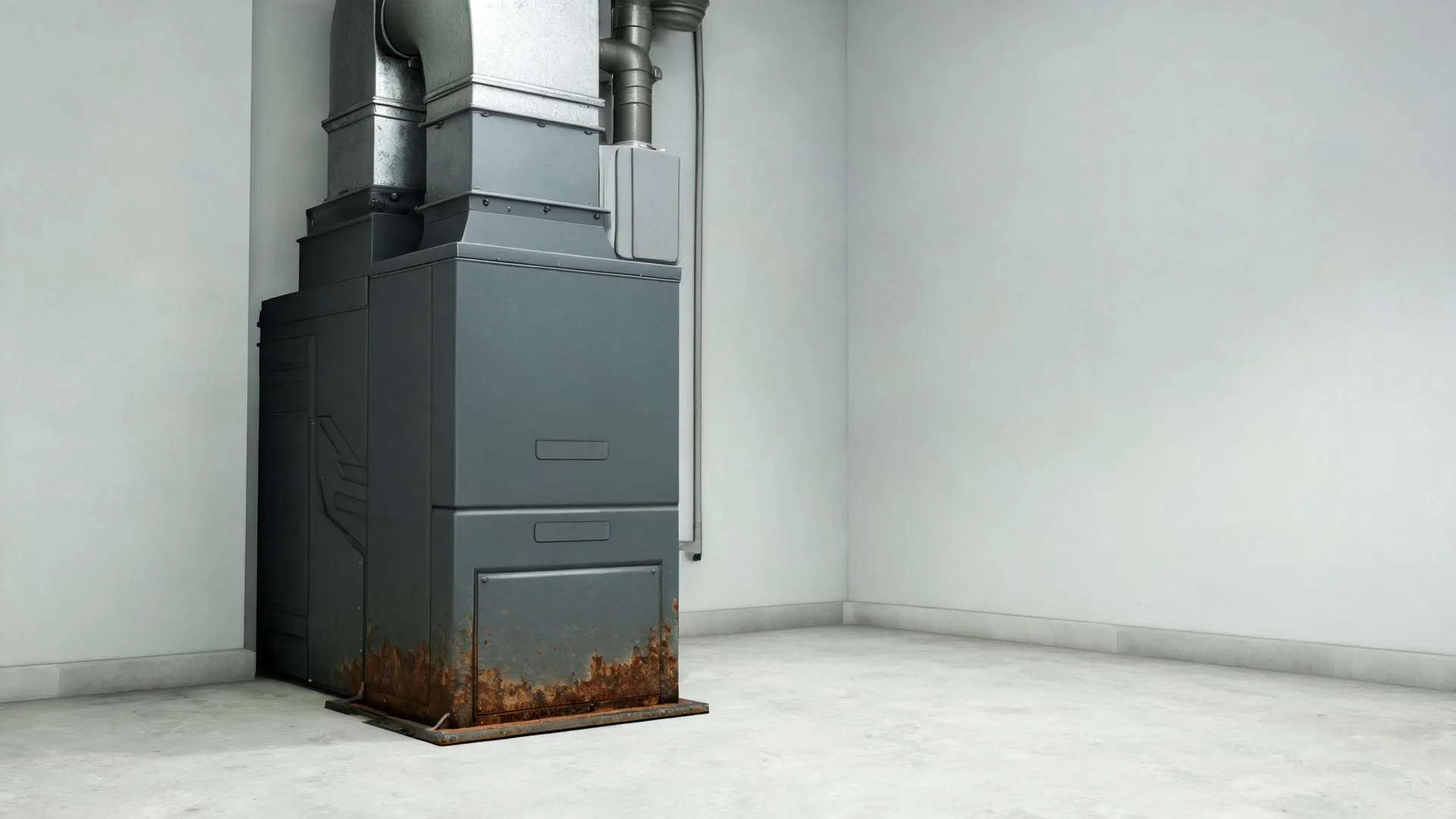
The question worth asking isn't how dramatic the symptom feels, it's what actually failed. A furnace that won't light is usually a cheap fix regardless of its age. A sensor, an igniter, a pressure switch, those are wear parts, and swapping one doesn't say anything bad about the rest of the unit. The heat exchanger and the blower motor are a different story, because those failing usually means the furnace has been working hard for a long time already. If a tech finds a worn part on a furnace that's otherwise sound, fixing it is the right call no matter how old it is. If the cabinet's rusting, the burners are scorched unevenly, or this is the second or third repair in a short stretch, that's worth factoring in alongside the furnace's age before deciding what to do next.