A row of illuminated white colonial houses photographed at twilight along a tree-lined road with a stone wall in the foreground.

Heat Pump Maintenance in Salisbury, MD

Tell us about the job

Takes about a minute. No obligation.

Tune-up, service, or cleaningHeat PumpWicomico County, MD
Step 1 of 2

What ZIP code is the job in?

A dirty filter makes the whole system work against itself

When the filter clogs, the indoor coil gets less airflow than it needs. In heating mode that strains the compressor. In cooling mode the coil can ice over, and once it does, it stops absorbing heat the way it should. A filter changed on schedule is the cheapest insurance this machine gets.


The outdoor coil and the drain need their own look

The outdoor coil collects leaves, grass clippings and dust, and a caked coil can't move heat properly in either direction. The condensate drain matters just as much. In cooling mode it carries water away from the indoor coil, and if it clogs, that water backs up and can shut the system down or damage what's around it.

The refrigerant charge can run low without a single symptom you'd notice from the thermostat.

Gauges on the lines catch that early, before the compressor has to work harder every day to make up for it.

A neglected heat pump burns more power, and Maryland power is not cheap

Power costs 17.86 cents a kWh statewide
68 damaging wind events from 2015 to 2024
12 winter storms from 2015 to 2024
Heat pumps in Salisbury work for it come OctoberHeat runs October through April here. September is the month to get it checked.

Wicomico County asks real work of a heat pump both ways, heating through the winter and cooling through the summer, but it never asks for much at once. Winter nights average 29°F here, nothing like the deep cold that pushes a compressor to its limit elsewhere. Summers run warm and humid rather than brutal. That's an easier load than a lot of the country puts on this equipment, and an easier load means less wear on the compressor and the coils year over year. It still wears. A unit running moderate duty for years can develop a slow refrigerant leak or a coil caked with debris just like one that's been pushed harder, and a yearly check catches that before it turns into a breakdown on the first cold night or the first humid week.

A newer system is worth keeping that way

Half the homes in Wicomico County were built in 1984 or later, which means a lot of heat pumps here still have plenty of working life left in them. A yearly check is what keeps a newer system that way, catching the small stuff before it turns into a compressor problem.

Find a contractor
A man in a cap, dark shirt and tan work pants walks up stone steps toward a dark blue front door, carrying a canvas tool bag, with a potted shrub beside the entry.
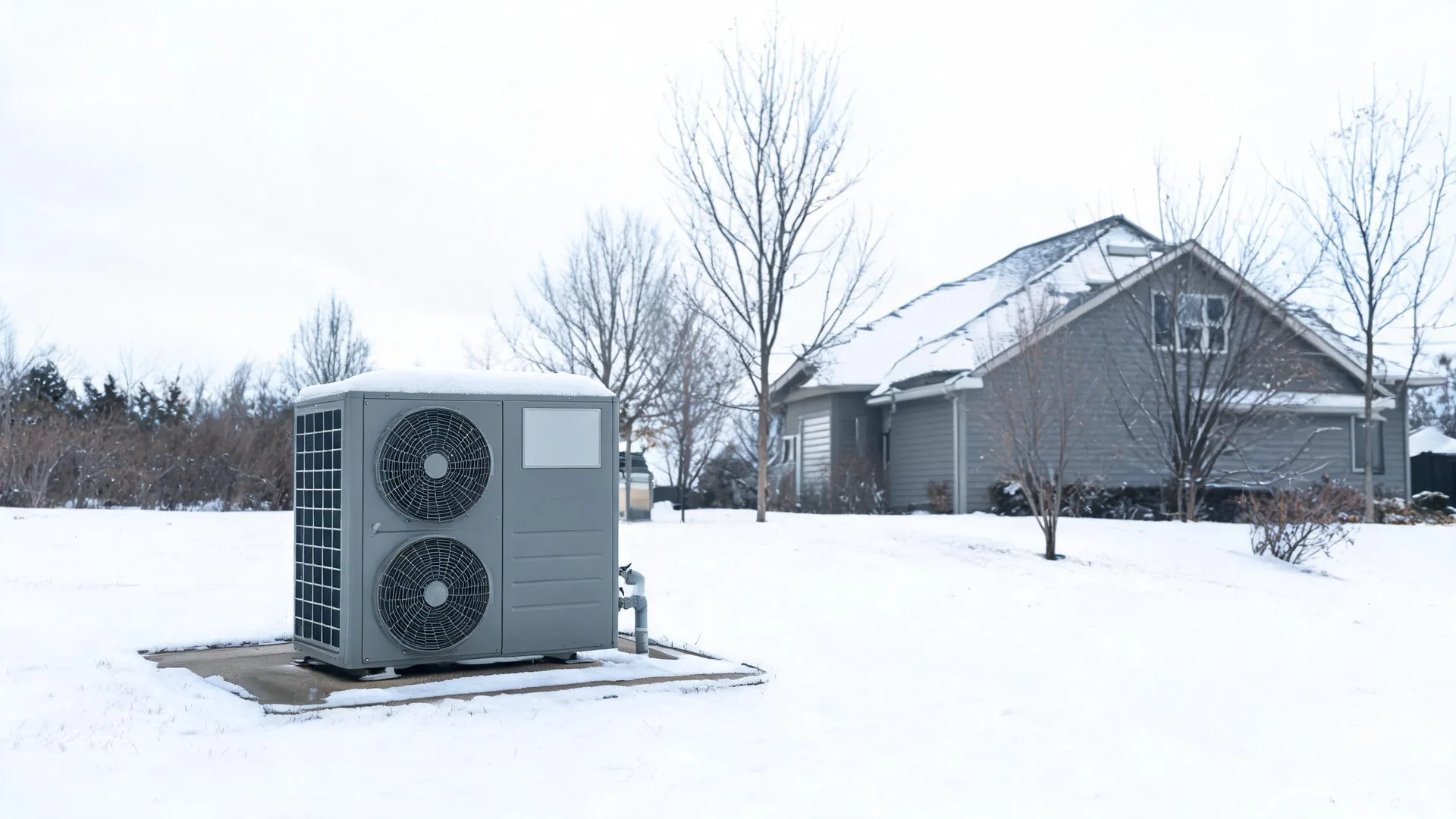
A gray heat pump outdoor unit mounted on a concrete pad next to the stone-accented exterior wall of a house.

A real tune-up touches the parts you can't see

A quick visit gets the filter swapped and the thermostat checked, then calls it done. A thorough one puts gauges on the lines to check the refrigerant charge, checks the suction and discharge pressures against what the system is supposed to run, and pulls the panel to look at the contactor and capacitor instead of guessing they're fine. It means checking the reversing valve actually shifts the system between heating and cooling, since that's the part unique to a heat pump and the part most likely to get skipped. A real tune-up also checks amp draw on the compressor and fan motor against their rated load, because a motor pulling too many amps is wearing out even while it still runs. If the visit takes about as long as it takes to change a filter, that's what happened.

The filter is the one job that's yours

Check it every month, and swap it when it looks gray or matted instead of waiting for a fixed date. A heat pump run with a dirty filter is working against itself no matter what else gets checked at the yearly visit. Between visits, this is the one thing under your control.

Keep the area around the outdoor unit clear

Leaves, mulch, and grass clippings piling against the outdoor coil block airflow the same way a dirty filter does, just from the other side. Keep plants trimmed back and give it room on all sides. Don't stack anything against it or cover it, even in the months it's not running hard.

Skip the yearly visit and nothing fails right away. That's what makes it easy to put off. The reversing valve can start sticking a little before it fails outright, so the system defrosts slower than it should or hesitates switching between heating and cooling, and nobody notices because the thermostat still says the right number eventually. A capacitor weakens the same way, giving the compressor a harder start every time for months before it finally doesn't start at all. By the time there's a symptom you can feel, the part has usually been failing quietly for a while. A tune-up is what catches it in the quiet part.

A proper tune-up also checks the defrost cycle, not just the parts that run all the time. A heat pump has to sense frost building on the outdoor coil, switch into defrost mode, melt it off, then switch back. It does this on its own all winter without anyone noticing. If the defrost control or its sensor is off, the coil can stay iced over longer than it should. An iced coil can't pull heat from the air no matter how hard the compressor works. A tech checks that the cycle actually fires and actually ends on its own, not just that the unit happens to be running. The reversing valve gets the same kind of attention, because these are the parts that make a heat pump different from a furnace or an air conditioner alone. They're also the easiest ones to miss if a visit is really just a filter change.