




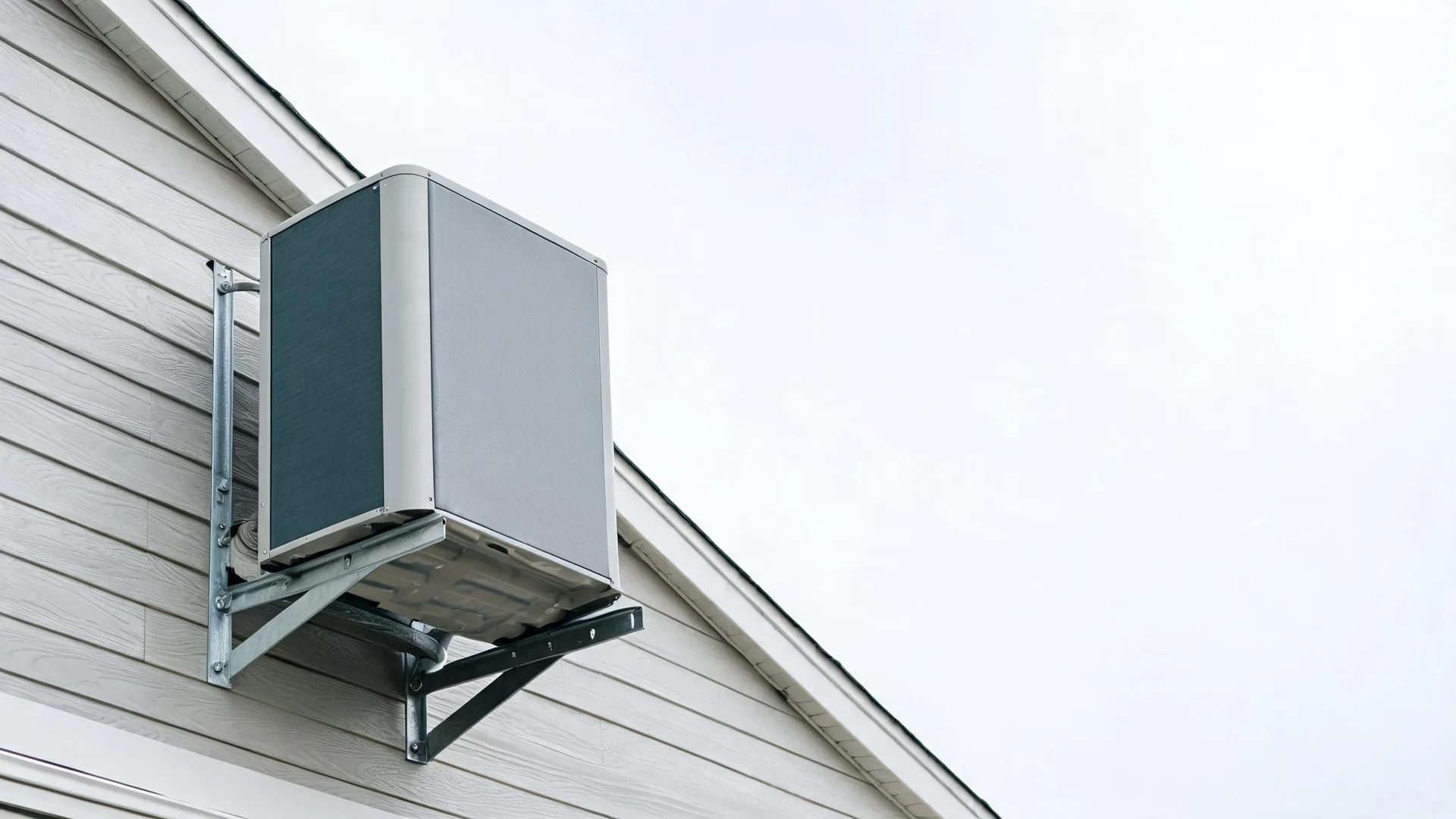
A grey outdoor HVAC unit mounted on a concrete pad beside the beige-sided exterior wall of a suburban house.

Heat Pump Maintenance in Hagerstown, MD

Tell us about the job

Takes about a minute. No obligation.

Tune-up, service, or cleaningHeat PumpWashington County, MD
Step 1 of 2

What ZIP code is the job in?

Electricity in Maryland ran 17.86 cents per kilowatthour in 2024, higher than a lot of the country. A heat pump that's low on refrigerant or pulling air through a dirty filter has to run longer to keep the house at temperature, and every extra hour shows up on the bill. A tune-up catches the coil that needs cleaning or the refrigerant charge that's drifted low, before the system starts working harder to make up for it. That's cheaper to fix in spring or fall than to pay for all winter or all summer.

A heat pump needs one tune-up a year, whether the house went up before 1974 or after.

Half the homes in Washington County fall on each side of that line, and the yearly check doesn't change either way.

September gets cold weather ready. June gets hot weather ready.

Cooling runs June through August
Heat runs October through April
148 damaging wind events from 2015 to 2024

A spring or fall tune-up is the cheapest way to keep that bill in check. A technician can clean the outdoor coil, check the refrigerant charge, and swap the filter before the system has to work around them. Skip it, and the heat pump makes up the difference by running longer, not by breaking down right away. You won't see the problem until the bill shows it to you.

One tune-up a year covers it

Washington County has seen its share of hard weather, 148 damaging wind events between 2015 and 2024 among them. None of that changes what a heat pump needs. One tune-up a year still covers it, done in spring or fall, before the season asks something of the system.

Find a contractor
A residential heat pump outdoor unit mounted on a concrete pad next to a house with gray vinyl siding.

What's wearing down where you can't see it

A heat pump runs both directions all year, so nothing is hiding from one hard season the way it might in a furnace. A technician opens the cabinet and checks what the thermostat can't show. The capacitor that starts the compressor and the fan either holds its charge or it's starting to weaken. A weak one doesn't announce itself. The system still starts, still runs, until the day it doesn't. Low refrigerant works the same way. The house still gets warm or cool, just slower, and the only sign from inside is a system that runs longer than it used to. Finding the actual number means a gauge goes on the line. That's the part a homeowner can't do from the living room.

The coil keeps doing its job worse, not failing at it

A heat pump's outdoor coil collects dirt and pollen over time. Airflow through it drops, so the system pulls less heat from the air in winter and dumps less heat into it in summer. It still runs. It just moves less heat per hour than it used to, and nothing inside the house tells you that's happening.
The wear lands on the compressor

A compressor forced to run longer hours, cycle after cycle, wears against bearings and windings sized for normal runtime. That wear doesn't level off or stay put. It adds up, and the compressor is the part that keeps the whole system running. Maintenance catches the dirty coil or the low charge while that's still all it is.

The filter is the one part of this system a homeowner actually handles, and it matters more than its size suggests. A clogged filter starves the indoor coil of airflow, and that coil needs steady airflow across it to do its job in either direction. Less air moving over it means the system works harder to move the same amount of heat. The outdoor coil runs into the same problem from a different angle, caked with dirt or leaves until it can't give up or pull in heat the way it should. The condensate drain gets less attention but causes its own trouble. A heat pump pulls moisture out of the air during the cooling months, and that water has to go somewhere. A clogged drain line backs that water up into the pan and sometimes into the house itself. None of this announces itself early. A tech checks the filter, both coils and the drain on the same visit, because a clean filter does no good if the coil behind it is still dirty.

A tune-up means someone actually gets hands on the system, not just a glance at the thermostat. The tech checks refrigerant charge against what the system calls for, because too little or too much both make it work harder than it should. Electrical connections get tightened, since a loose one generates heat and wears out whatever it's feeding. The contactor gets checked for pitting, the capacitor for whether it still holds its rating. Both fan motors, indoor and outdoor, get oiled if they take oil and checked for noise or wobble if they don't. The thermostat gets tested against the system itself, not just its own display, so a call for heat actually turns into heat and not something stuck halfway between modes.