A two-story red brick house with black shutters and a dark roof stands behind a mowed lawn framed by large deciduous trees, viewed over a dry-stacked stone wall in the foreground under an overcast sky.

Heat Pump Maintenance in Denton, MD

Tell us about the job

Takes about a minute. No obligation.

Tune-up, service, or cleaningHeat PumpCaroline County, MD
Step 1 of 2

What ZIP code is the job in?

A dirty filter works the whole system harder

When the filter clogs, the blower has to pull harder to move air across the indoor coil. That coil can start to ice up, and a heat pump running on a frozen coil loses efficiency fast and strains the compressor behind it.


The outdoor coil and drain line need a look too

A technician checks the outdoor coil for dirt and leaves pressed into the fins, since airflow problems there are as hard on the system as a dirty filter. The condensate drain gets checked as well, because a clogged line backs up water near the indoor unit instead of carrying it outside.

Denton winters average 28 degrees overnight, not deep cold, so a heat pump here isn't fighting extreme temperatures most of the season.

A heat pump working under lighter strain still wears down over the years, so a yearly check is about catching small problems before they grow.

A neglected heat pump burns extra power, and power here already costs more

Power costs 17.86 cents a kWh statewide
75 damaging wind events from 2015 to 2024
9 winter storms from 2015 to 2024

Heat pumps in Caroline County switch over and start heating in October, so September is the month to get one looked at. By October it's running every day, and a weak part shows up fast once that starts. This system also doesn't get the long rest a furnace gets between seasons. It heats October through April, then turns around and cools through summer, so there's no stretch where it just sits idle. A check in September catches a small problem before the system leans on it for the next seven months.

Keep up the yearly check

Easy duty still wears parts. A yearly check keeps it going a long time.

Find a contractor
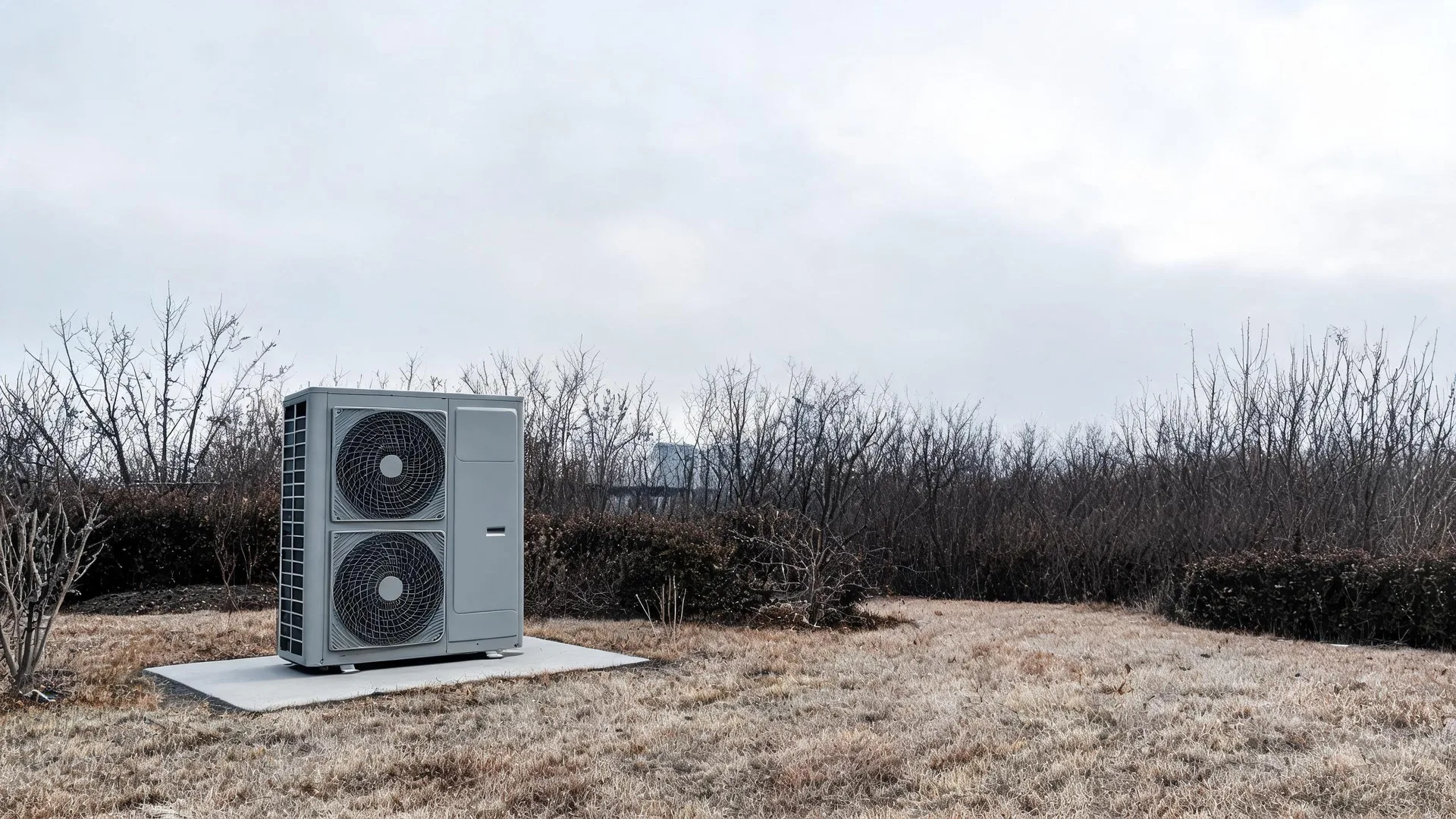
A residential heat pump outdoor unit mounted on a concrete pad next to a house with gray vinyl siding.

A newer system still needs a yearly look

Half the homes in Caroline County were built in 1981 or later. If yours is one of them, or if the heat pump itself was swapped in more recently than that, it's probably still well within its working life. That's worth something. A system with years ahead of it is worth keeping on a yearly check, since whatever a tech catches now stays caught for all the years still left on it.

Change the filter on a schedule

A dirty filter is the one thing you can handle yourself, and it matters more with a heat pump than with a furnace alone since this filter sees duty all year, not just winter. Check it monthly and swap it when it looks gray or clogged rather than waiting for a set date. A filter you can hold up to a light and not see through is already working against the blower.

Know what to leave alone

Keep the area around the outdoor unit clear of leaves, grass clippings and anything stacked against it, since that unit needs air moving through it from all sides. Don't pull it apart or clean the coil yourself. Refrigerant lines and electrical connections inside that cabinet aren't a homeowner job, and a tech needs to see the system running under normal conditions to catch a part that's wearing out before it fails outright.

A heat pump that's about to need help gives a few warnings before it quits outright. It might run longer cycles than it used to, or kick on more often, because a weak part is making it work harder to hit the same temperature. You might notice one room staying colder or warmer than the rest, which points to airflow trouble somewhere in the system. A hissing or bubbling sound near the outdoor unit can mean the refrigerant charge is low. Ice on the outdoor coil when it shouldn't be there, or the system blowing air that feels wrong for the setting, both mean something inside isn't switching over the way it should. None of these stop the system cold right away, which is exactly why they're easy to ignore until the part behind them fails for good.

A proper tune-up starts with readings, not a glance. A tech checks refrigerant charge against what the system is supposed to hold, because a heat pump low on refrigerant loses capacity in both directions, heating and cooling alike. Electrical connections get checked for looseness and corrosion, since a bad connection is what takes out a contactor or a capacitor down the line. The reversing valve gets tested too, the part that switches the system between heating and cooling, because a valve that sticks halfway is easy to miss until the day it won't switch at all. Belts aren't part of this, since the blower motor drives directly, but the motor bearings and the blower wheel itself get checked for wear and for dust buildup that throws the wheel off balance. The thermostat gets tested against the actual system response, not just its display, to make sure the equipment is doing what the thermostat thinks it told it to do.