





A two-story red brick house with black shutters, a dark roof and a chimney stands on a mown lawn behind a dry stone wall, framed by large spreading deciduous trees under an overcast sky.

Heat Pump Maintenance in Cambridge, MD

Tell us about the job

Takes about a minute. No obligation.

Tune-up, service, or cleaningHeat PumpDorchester County, MD
Step 1 of 2

What ZIP code is the job in?

A heat pump that's losing efficiency doesn't stop working. It just works harder to do the same job, and every bit of that extra effort shows up on the electric bill. Maryland households paid 17.86 cents per kilowatthour in 2024, well above what a lot of the country pays, so a system running at a loss here costs more than the same neglect would somewhere cheaper. A dirty coil, a low refrigerant charge, a clogged filter, any of these make the system move more electricity through the house for the same amount of heat or cool air. Catching that early is worth more in a state where every kilowatthour already costs more than most.

The filter is the one part the homeowner controls.

A clean filter keeps air moving freely across the coil, so check it every month and swap it when it looks gray.

Half these houses are older than the ductwork and wiring codes written since, and the weather here doesn't go easy on any of it. One visit a year catches what that adds up to.

Half the homes here were built by 1975
58 damaging wind events from 2015 to 2024
12 winter storms from 2015 to 2024

A heat pump here does double duty, four months of cooling and seven months of heat, so it barely gets a rest before the next season leans on it. September is the month before heat starts in October. That's when a contractor can catch a weak part before it has to run every day. Wait until October and the system is already working to keep the house warm while someone looks for what's wrong with it. The same goes for May, the month before cooling starts in June. Either way, the point is to find the problem before the season finds it for you.

A system running at a loss costs more here than most places

A tune-up catches the dirty coil or the low charge before it shows up as a higher bill every month after. Maryland already pays more per kilowatthour than a lot of the country, so a system running at a loss costs more here than it would somewhere cheaper.

Find a contractor
A man in a cap, dark long-sleeve shirt and brown pants carries a canvas tool bag up wooden porch steps toward a navy front door beside a potted shrub.
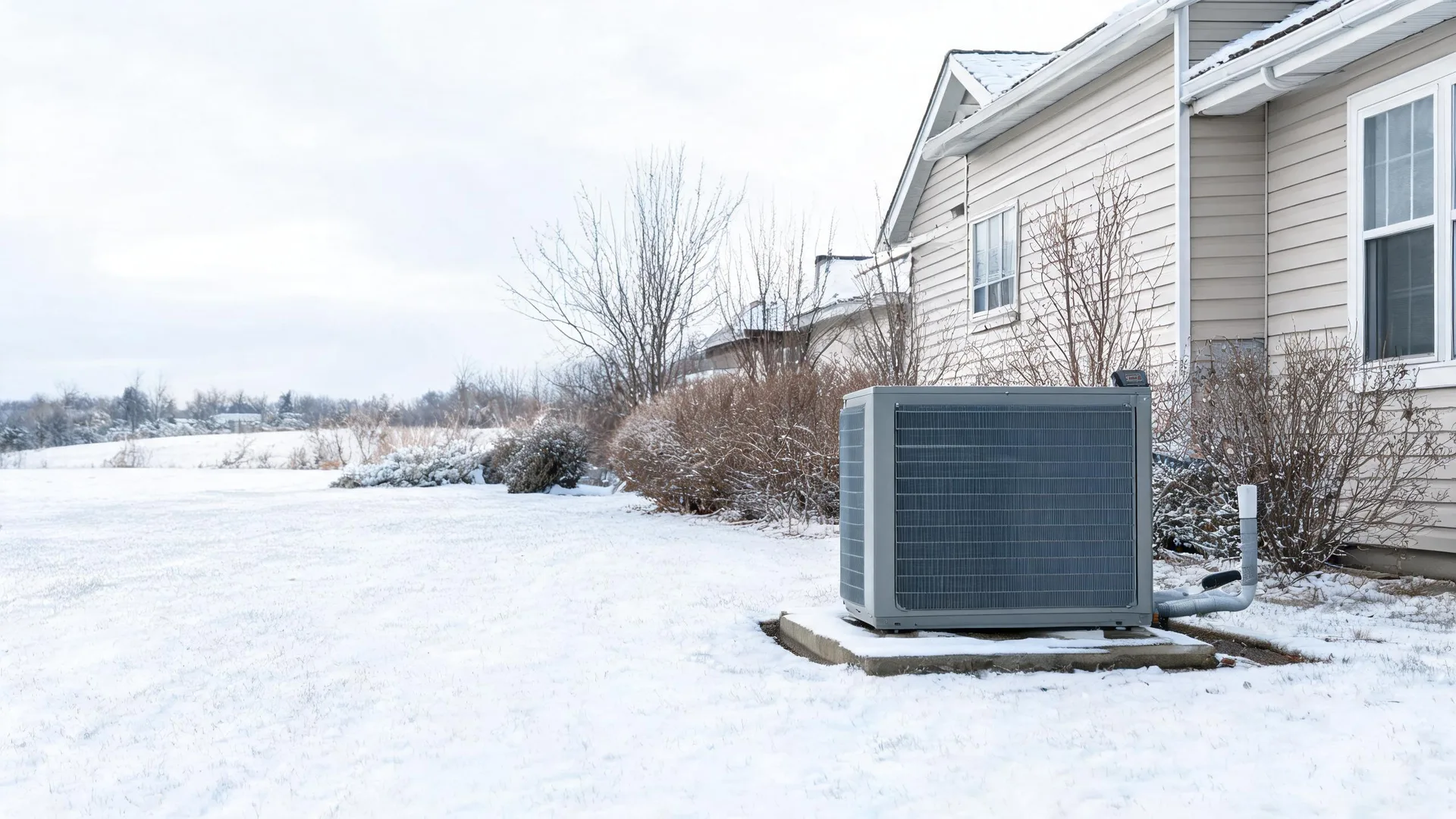
A gray heat pump outdoor unit mounted on a concrete pad next to a residential house with lap siding and stone accents.

Easier duty, not no duty

This heat pump runs year round, but the load on it is split fair between heating and cooling instead of one season beating on it hard. Winters here average 29°F overnight, well short of the single-digit cold that pushes a heat pump into constant defrost cycles and leans on the backup heat. That's easier duty than a lot of places get. It doesn't mean the parts last forever on their own. The coil still collects dirt, the refrigerant charge still drifts low, and a contactor still wears out from cycling on and off. A yearly check catches those before they turn into a breakdown, and on a system that isn't being pushed hard, most of what a tech finds is something worth fixing rather than something worn past the point of repair.

The system starts telling on itself before it quits

A heat pump about to need service doesn't usually just stop. It runs longer to hit the same temperature, the air from the vents feels cooler than it should on heat mode, or it short cycles, kicking on and off instead of running a steady stretch. Frost building up on the outdoor unit outside of a normal defrost cycle is another one. None of these mean the system is done. They mean something inside it, a sensor, a valve, a low charge, is already off.
A noise is a part asking for attention

Listen to the outdoor unit when it starts up and when it shuts off. A hum that goes on too long before the fan catches, a rattle that wasn't there before, or a click followed by silence instead of the compressor starting all point to a part wearing out, not a part that's already failed. Caught at the noise stage, it's usually a single part. Ignored, it's usually the compressor.

The coil and the drain do the work the filter is supposed to protect. Air crosses the indoor coil to get warm or cold, and that coil has to stay clean to pass heat the way it's built to. Dust that gets past a dirty or missing filter settles on the coil fins and blocks that transfer, so the system runs longer to move the same heat. The outdoor coil has its own job, dumping that heat outside in summer and pulling it from the air in winter, and it fouls just as easily with leaves, grass clippings and plain dirt if nothing clears it off. Meanwhile the drain carries away the condensation that cooling mode pulls out of the air. Let that line clog with algae or sludge and the water backs up into the pan, sometimes far enough to trip a safety switch and shut the system down, sometimes far enough to spill out and damage the floor underneath. None of these parts fail loud. They just make the system work harder until something downstream gives out.

A tune-up means someone actually opens the unit up rather than glancing at it. Outside, that's pulling the panel to check refrigerant pressures, cleaning the condenser coil, and making sure the contactor and capacitor are still within spec instead of waiting to fail on a hot or cold day. Inside, it's the evaporator coil, the blower wheel, and the drain line, checked and cleared rather than assumed fine. A good tech also checks the reversing valve, since that's the part that lets a heat pump switch between heating and cooling, and a stuck valve means the system is stuck doing only one job. Electrical connections get tightened, since a loose one generates heat and wears out the part it's attached to. None of this is guesswork. It's checking the same handful of parts that cause most failures, before they cause one.