An outdoor heat pump unit mounted on a concrete pad in front of a single-story suburban house with beige siding.

Heat Pump Maintenance in Aberdeen, MD

Tell us about the job

Takes about a minute. No obligation.

Tune-up, service, or cleaningHeat PumpHarford County, MD
Step 1 of 2

What ZIP code is the job in?

Zone 4A runs it both ways

A heat pump in Aberdeen works all year, heating through winter and cooling through summer, with overnight lows averaging 26°F in December, January and February. That's steady work, not the hardest kind. A system running at moderate load tends to hold up well if someone checks it yearly.


What a yearly check catches

A heat pump that isn't overworked still has a reversing valve, a defrost cycle and outdoor coils exposed to the weather. Harford County has seen 24 winter storms and 10 hail events over the past ten years. None of that breaks a heat pump outright, but it's the kind of thing a yearly check is built to catch before it becomes a repair.

Half the homes in Harford County were built in 1986 or later.

A heat pump installed with a newer home still has years ahead of it, and a yearly check is what gets it there.

Harford County sees 329 wind events and 24 winter storms in ten years. A yearly check keeps a heat pump ready for them.

368 severe weather events from 2015 to 2024
11% of homes statewide lost power a day or more in 2024
329 damaging wind events from 2015 to 2024

A heat pump here switches over to heat in October, and September is the month to have it looked at before that happens. The reversing valve needs to move freely, and the defrost cycle needs to fire when it should, both easier to check while the weather is still mild. Heat is the longer season by far, seven months against four for cooling, so it's worth more of the yearly check's attention even though the load itself stays moderate. Catch a weak part in September and it gets fixed on an easy day, not in the first cold snap when the system has already switched over. Scheduling around that October start, rather than the calendar year, is what keeps the system from meeting it with anything undone.

Keep up the yearly check

Easy duty still wears parts. A yearly check keeps it going a long time.

Find a contractor
A man in a faded olive work shirt and dark trousers climbs porch steps toward a navy front door, carrying a green canvas tool bag in his right hand, with a potted shrub in a blue planter beside the door.
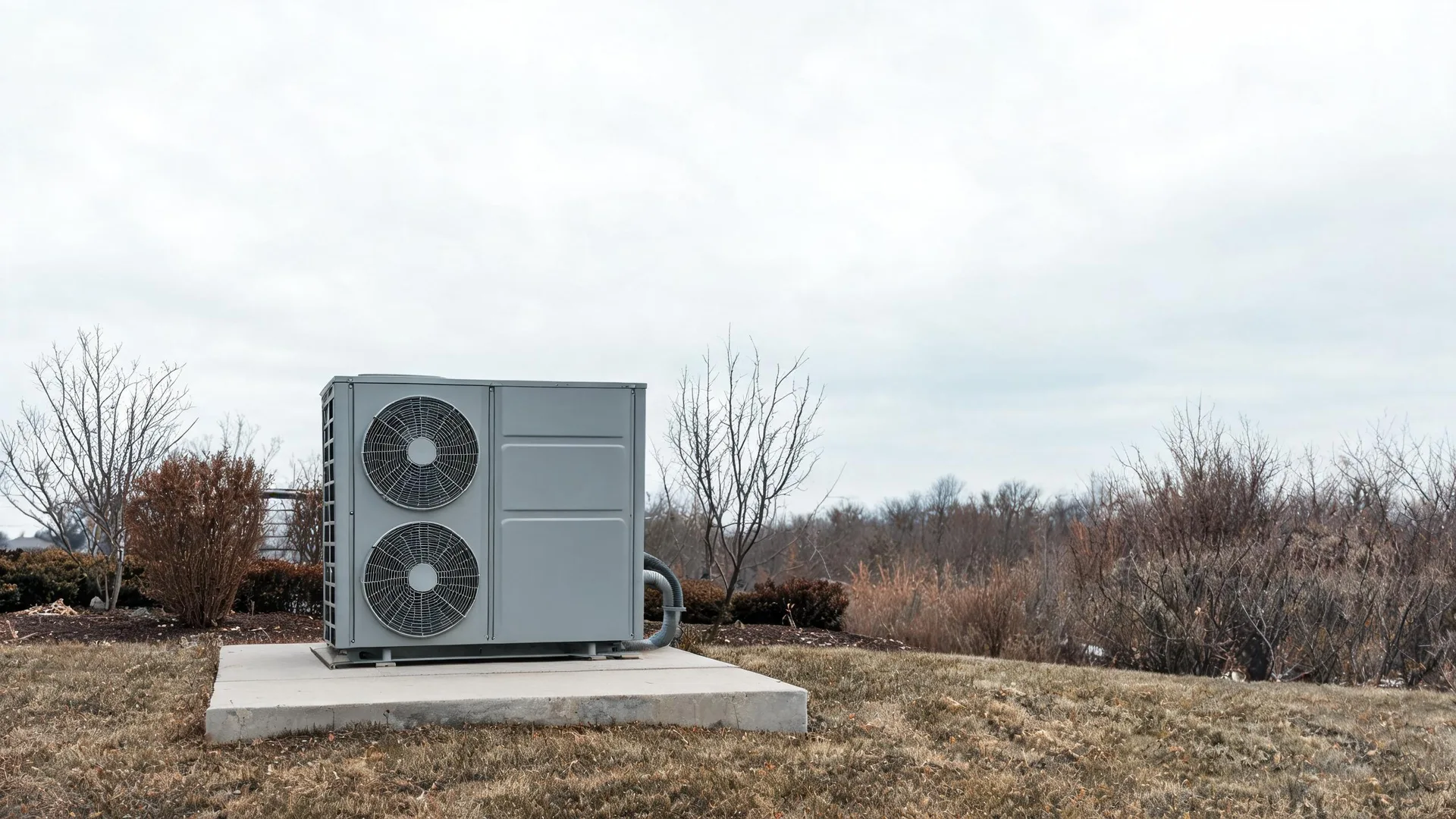
A gray heat pump outdoor unit mounted on a concrete pad next to a residential house with lap siding and stone accents.

Still new, worth keeping that way

Get on a schedule now while the system is new, and skip the guesswork later of figuring out what's original to the house and what's been replaced. A yearly check on a newer heat pump is quick work, mostly confirming the reversing valve and defrost cycle are still doing what they should. Keep that up every year and there's no stretch where small wear goes unnoticed long enough to turn into a bigger repair.

The coil gets the dirt first

An outdoor coil that never gets cleaned loses its grip on the air moving through it. Heat transfer drops, so the system runs longer to do the same job. Run it that way long enough and the compressor is the part that pays for it, since it works harder on every single cycle to make up the difference.

A skipped check doesn't announce itself

A failing reversing valve or a defrost cycle that's starting to stick won't shut the system down right away. It just does the job worse, cycle after cycle, until the day it doesn't. By then what would have been a part swap is often a bigger repair, found the hard way instead of caught early.

A heat pump rarely fails without warning signs first. Weak airflow from a vent, ice building up on the outdoor coil and not clearing in defrost, or the system running long cycles without actually warming or cooling the house, those are the early signs something needs a look. Short cycling, where the system kicks on and off more than it should, is another one. So is a hissing or bubbling sound near the outdoor unit, which can point to a refrigerant issue. None of these stop the system cold right away. They just mean it's working harder to do the same job, and that extra strain lands on the compressor eventually. A yearly check catches these before the homeowner has to notice them on their own.

A proper tune-up starts outside, with the coil. A tech washes it clean and checks the fins aren't crushed flat, since either one chokes off airflow. Refrigerant charge gets checked against what the system calls for, because too little or too much both make the compressor work harder for the same result. The reversing valve gets tested both directions, not just the one it happens to be sitting in that day. Defrost is checked next, making sure the sensor tells the system to clear the coil when it's actually iced and not on some fixed timer that ignores what's really happening outside. Electrical connections get tightened, since a loose one generates heat and that heat damages whatever it touches. The blower wheel gets a look too, because dust buildup there cuts airflow just as surely as a dirty filter does.