Two white colonial houses with lit windows and black shutters photographed at dusk along a tree-lined residential street.

Heat Pump Installation in Salisbury, MD

Tell us about the job

Takes about a minute. No obligation.

New system or replacementHeat PumpWicomico County, MD
Step 1 of 2

What ZIP code is the job in?

Electricity here runs 17.86 cents per kilowatthour

Maryland's electric rate came in at 17.86 cents per kilowatthour in 2024, well above the national average. A heat pump runs on electricity for both heating and cooling, so that rate applies to every month it runs.

Efficiency decides what the meter shows

Two heat pumps can heat the same house and use different amounts of power to do it. At this rate per kilowatthour, the difference between a unit that runs efficiently and one that does not shows up on every bill, not just a few.

7 months
October through April, your system heats
4 months
June through September, it cools
29°F
the average winter night it heats against
86°F
the average summer afternoon it cools against
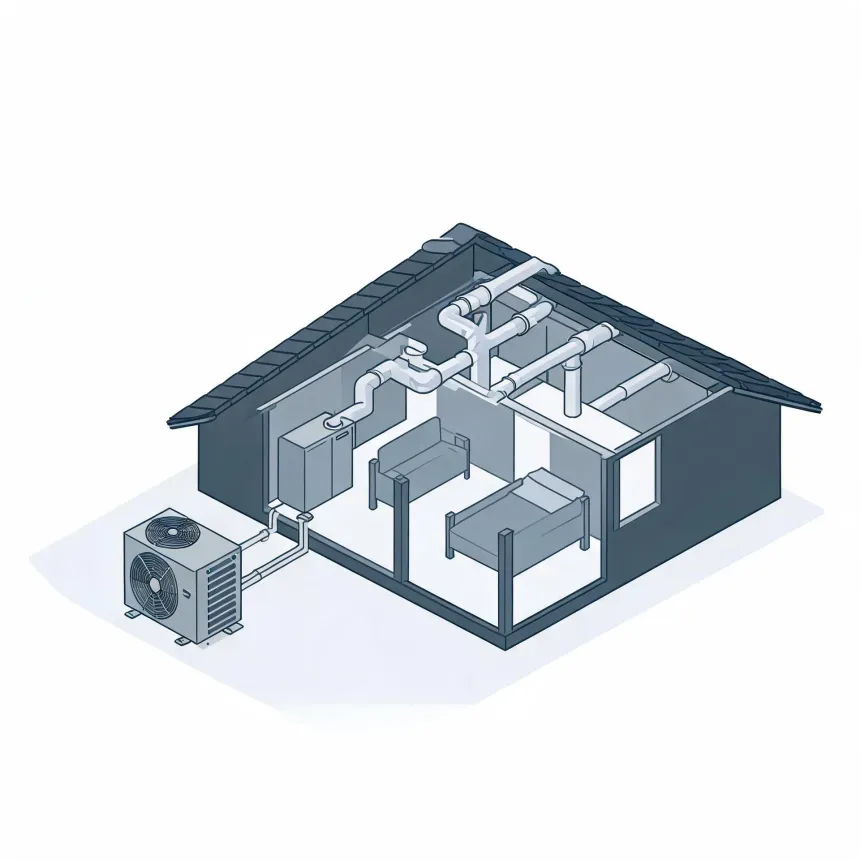
Isometric cutaway illustration of a house showing interior ductwork, an indoor air handler, and beds, with an outdoor condenser unit connected by lines outside the wall.
Your system heats October through April and cools June through September.

NOAA nClimDiv, 1991–2020 normals

Wicomico County winters average 29°F overnight, not far below freezing.

A heat pump here isn't fighting extreme cold most nights, so a well-built standard system can handle the load.

Most homes here already heat with electricity, and a heat pump fits right in

62.2% of homes heat with electricity
Climate zone 4A
Power costs 17.86 cents a kWh statewide
Install before SeptemberHeat runs October through April here, about seven months a year.

Ask what happens at the coldest point in the cold snaps, not just the average night. Every heat pump has a balance point, the outdoor temperature below which it can't pull enough heat from the air to keep up on its own, and that's where a backup heat source takes over. Ask what the backup is and how it switches on. Some systems use electric resistance strips, which work but cost more to run than the heat pump itself. Ask about the compressor too, whether it runs at one fixed speed or varies its output, because a variable-speed compressor holds steadier temperatures and spends less time cycling on and off. And ask what happens in defrost mode, when the outdoor coil ices up and the system briefly reverses to melt it off. A unit that handles defrost well won't blow cold air into the house every time it clears the coil.

Compare efficiency ratings before you pick a system

At 17.86 cents per kilowatthour, the compressor you pick is what decides the bill, not just the thermostat setting. Ask the contractor for the efficiency rating of each system being quoted and compare them side by side before deciding.

Find a contractor
A man in a dark work shirt, tan cargo pants and boots, seen from behind, climbs porch steps toward a navy front door while carrying a worn leather tool bag.
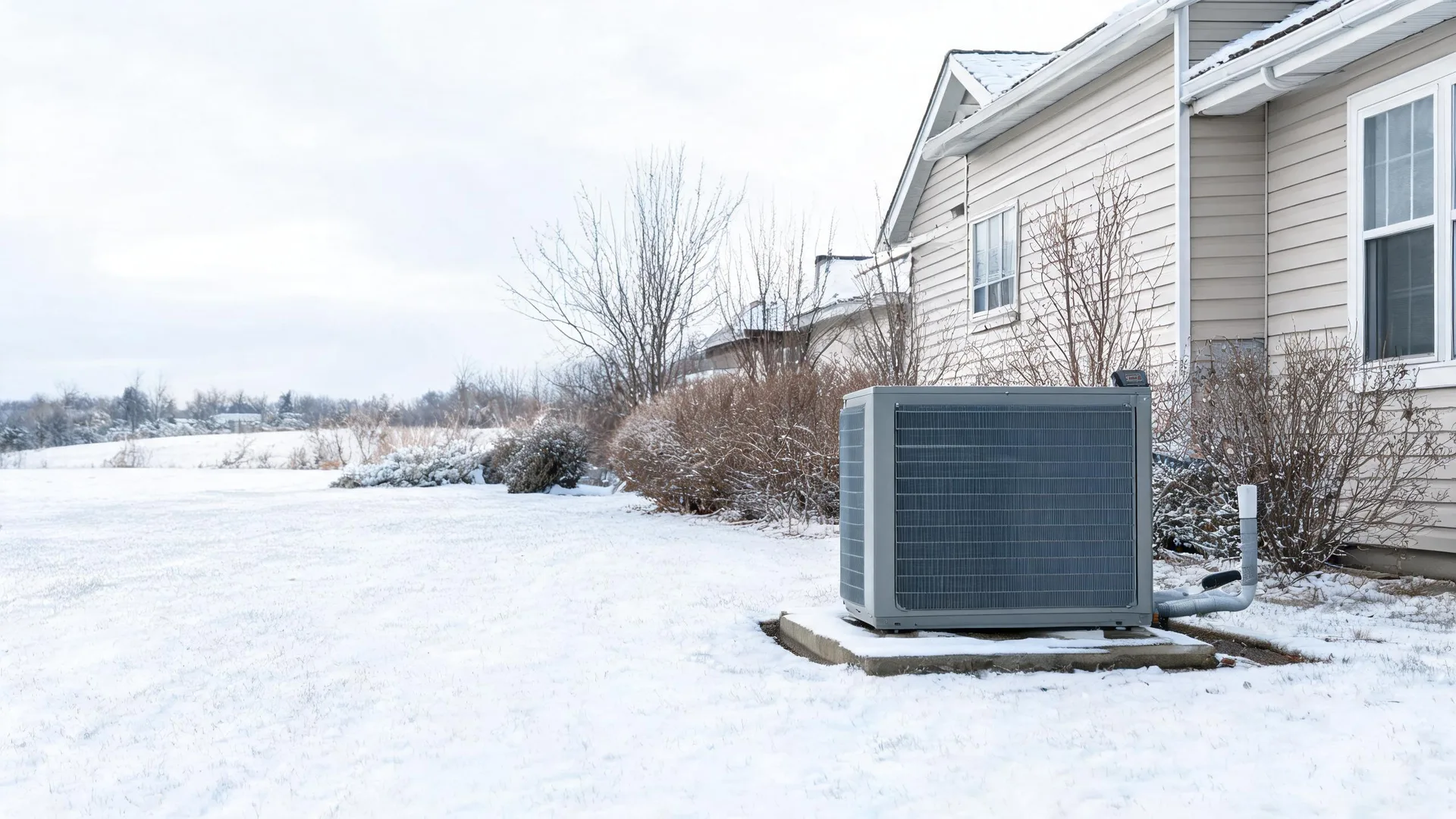
A gray heat pump outdoor unit mounted on a concrete pad next to a residential house with lap siding and stone accents.

Sized for this load, not for the extremes

That 29°F average is the load this system carries most winter nights, and most of them won't push it near its limit. A standard heat pump built for this climate zone can handle that without reaching for its top efficiency tier. Put the money into a unit sized right for the house and installed well, with ductwork that's sealed and a charge that's set correctly. Those two things affect how long it lasts more than the model number does.

The size comes from a room-by-room count, not the old unit

A contractor works out a heat pump's size with a load calculation, adding up the windows, walls, and ceiling area in every room rather than copying whatever size is already out there. Houses with the same floor plan can still need different sized systems if one has more window area or faces a different direction. Sizing off square footage alone skips all of that.

Bigger isn't the safe choice here

An oversized heat pump reaches the thermostat's setting fast, then shuts off before it's pulled much moisture out of the air, so the house can feel damp even with the temperature right. It also cycles on and off more, and the compressor sees more wear from starting up than from running steady. Sized right, the system runs longer stretches at a lower output and holds the temperature more evenly.

The efficiency rating on a heat pump tells you how much heat it moves for the power it puts in, nothing more. A unit with a higher rating pulls more heat out of the same outdoor air per bit of electricity than one with a lower rating. That number comes from a lab test under set conditions, so it won't match exactly what you see at home, but it still works for comparing one system against another. Systems built to carry the same house can post very different ratings, and that gap shows up on the meter through the cooling months and the heating months both. The rating also isn't fixed for the life of the unit. A dirty coil, a low refrigerant charge, or a clogged filter all pull the real performance below what's printed on the label, which is why installing it right and keeping it up matters as much as the rating it started with.

Installation day starts with the old equipment coming out. That means the indoor coil, the outdoor unit, and the line set running between them. If the ductwork is staying, the crew checks it for leaks and seals what needs sealing before the new air handler gets connected to it. Setting the outdoor unit comes next, on a pad or a mounting bracket, with clearance around it so air can pull through the coil freely. The line set gets run, connected, and pressure tested before anyone adds refrigerant. A leak found after the charge goes in means starting over. Once the system holds pressure, it gets charged to the weight the manufacturer specifies for that line length, not just until the gauges look about right. Last comes startup, checking airflow across the coil, confirming the thermostat talks to the system, and running it in both heating and cooling to see that it responds the way it should.