






Two white multi-story colonial houses with lit windows and black shutters photographed at night, fronted by a stone wall.

Heat Pump Installation in Ocean City, MD

Tell us about the job

Takes about a minute. No obligation.

New system or replacementHeat PumpWorcester County, MD
Step 1 of 2

What ZIP code is the job in?

Maryland homes paid 17.86 cents per kilowatthour in 2024, well above the national average. A heat pump moving heat instead of burning fuel to make it already costs less to run than electric resistance heat. But at that rate, the difference between a well-matched system and an oversized or mismatched one shows up fast on the power bill. The efficiency rating on the unit you choose matters more here than it would somewhere power is cheap.

7 months
October through April, your system heats
4 months
June through September, it cools
30°F
the average winter night it heats against
85°F
the average summer afternoon it cools against
Isometric line illustration of a cutaway house showing interior rooms with furniture, ceiling ductwork, and an outdoor condenser unit connected by lines along the exterior wall.
Your system heats October through April and cools June through September.

NOAA nClimDiv, 1991–2020 normals

Electricity heats 63.7% of homes in Worcester County.

A heat pump replacing electric heat fits into wiring already built for it.

Ocean City winters are mild on a heat pump. The storms are the hard part

45 damaging wind events from 2015 to 2024
12 winter storms from 2015 to 2024
Winter nights average 30°F

Worcester County is in climate zone 4A, which asks real work of both heating and cooling. Any split-system heat pump installed here has to clear 14.3 SEER2 for cooling and 7.5 HSPF2 for heating. That is the federal floor, not a local add-on, so it limits what a contractor can legally put in regardless of brand or size. A federal tax credit is available on qualifying equipment, which can offset some of the cost of meeting that standard.

Efficiency pays here

Power costs more here, so an efficient system pays you back on every bill.

Find a contractor
A man in a cap, navy long-sleeve shirt and tan work pants carries a canvas tool bag up steps toward a dark front door, with a potted shrub beside the porch.
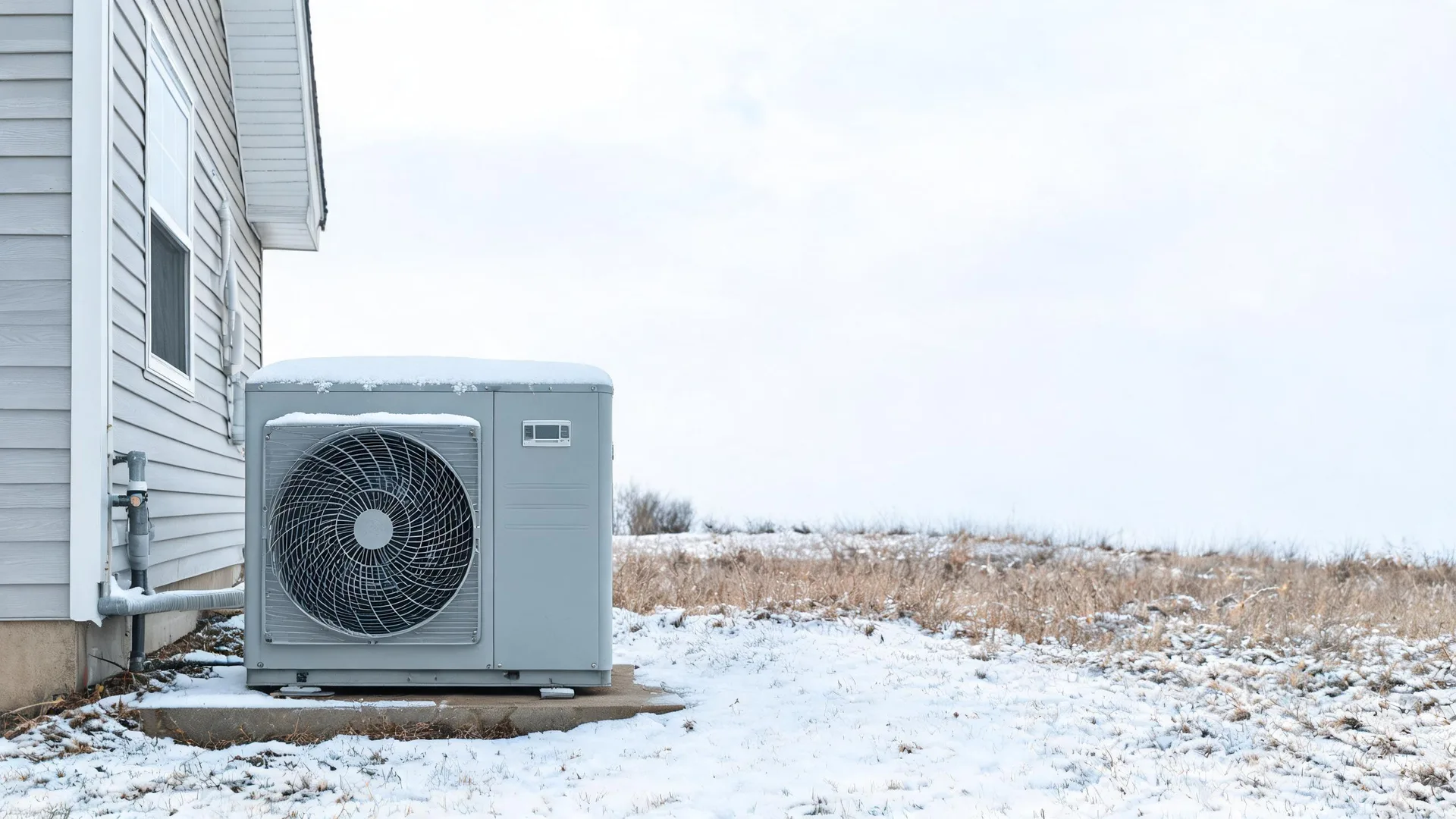
A gray air-source heat pump mounted on a concrete pad next to a house with gray vinyl siding, surrounded by gravel and flanked by green shrubs and white hydrangea flowers.

Right size runs steady. Wrong size runs hard.

A heat pump that is too big short cycles. It blasts a room to temperature, shuts off before it finishes pulling moisture out of the air, then kicks back on a few minutes later. That stop and start wears on the compressor more than a long steady run would. One that is too small never gets ahead. It runs and runs through the coldest or hottest stretches and still falls short, and the backup heat strip ends up doing work it shouldn't have to. Getting the size right means a contractor works out a load calculation for the house, the kind that accounts for window area, insulation, ceiling height and air leakage, not just square footage. A unit sized off square footage alone is often wrong in one direction or the other. The right size runs in long, steady cycles that hold the house at temperature without strain, and that steady running is what the equipment is built to do.

Ask for the load calculation, not a guess

Any contractor can look at square footage and quote a size. Ask to see the actual load calculation, the room by room numbers that account for window area, insulation and ceiling height. If a contractor won't show you the math, they probably didn't do it.
Ask what happens below freezing

Every heat pump loses capacity as the outdoor temperature drops, and most lean on a backup heat strip to cover the gap. Ask where that point is for the system you're quoted, and how the backup heat is controlled. A system that leans on the strip too early will cost more to run than the efficiency rating on the box suggests.

Whoever handles the install still has to deal with the system coming out. A heat pump holds refrigerant under pressure, and that refrigerant has to be recovered before the lines get cut, not vented into the air. Removing the old units themselves is straightforward, the outdoor unit unbolts from its pad and the indoor coil comes out of the air handler, but disconnecting them safely takes the same license as putting the new ones in. If the old system ran on a disconnect box or dedicated breaker, that gets reused or rewired to match whatever the new unit needs. None of this is the hard part of the job. It just has to happen in the right order before the new equipment goes in.

Installation day starts with the old equipment coming out and the new pad or mounting brackets going in, so the outdoor unit sits level and the line set reaches without strain. Once the new outdoor unit and air handler or indoor coil are in place, the refrigerant lines get connected, and the whole system gets evacuated with a vacuum pump before any refrigerant is released into it. Skipping that step leaves moisture and air trapped in the lines, and that moisture causes problems in the compressor down the road. After charging, the contractor checks refrigerant levels against the manufacturer's specification, not just by feel. Electrical connections get tied in, the thermostat gets set up and the system runs through a cycle in both heating and cooling to confirm it responds correctly. A contractor worth hiring walks through what was done and what to watch for before leaving, not just hands over a remote and goes.