






White colonial houses with lit windows photographed at dusk along a tree-lined residential street.

Heat Pump Installation in Mountain Lake Park, MD

Tell us about the job

Takes about a minute. No obligation.

New system or replacementHeat PumpGarrett County, MD
Step 1 of 2

What ZIP code is the job in?

Electricity in Maryland ran 17.86 cents per kilowatthour in 2024. A heat pump moves heat instead of burning gas for it, so it already uses less power than baseboard or resistance heat to do the same job. But not every heat pump uses that power the same way. One with a higher efficiency rating pulls less electricity from the grid to produce the same warmth, and at these rates, that difference shows up on your bill every month, not just once a year.

9 months
September through May, your system heats
2 months
July through August, it cools
21°F
the average winter night it heats against
78°F
the average summer afternoon it cools against
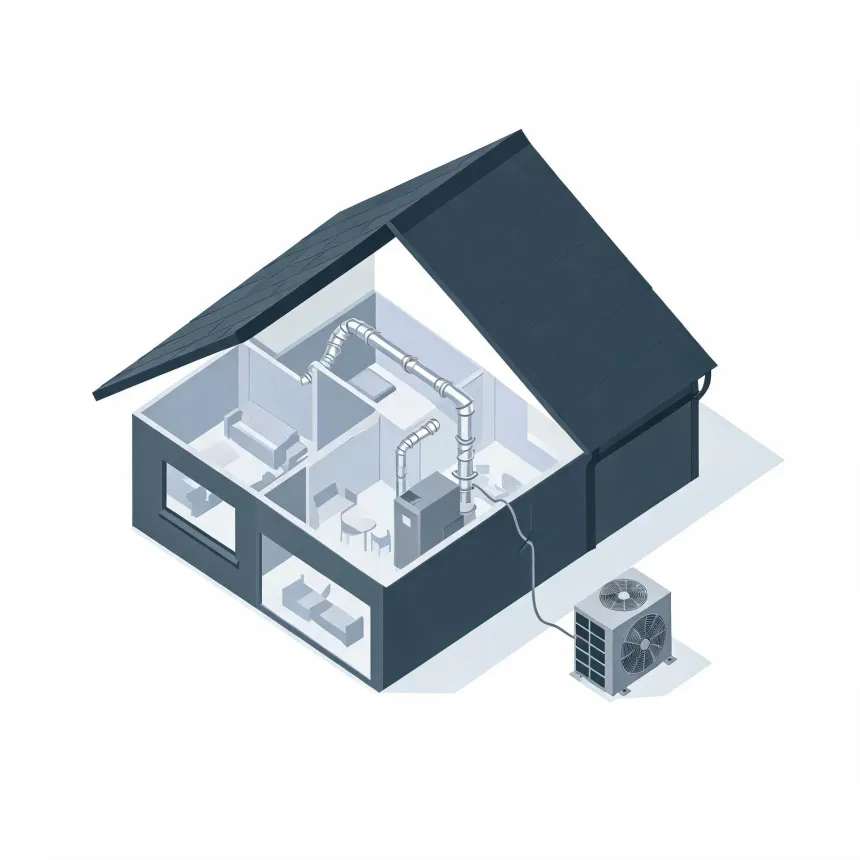
Isometric illustration of a cutaway house showing interior rooms with furniture, a furnace and ductwork, connected by a line to an outdoor condenser unit on the ground outside.
Your system heats September through May and cools July through August.

NOAA nClimDiv, 1991–2020 normals

Winter is the main event here, with cold enough nights that a heat pump has real work to do.

But Mountain Lake Park isn't pushing a system to its limit, so a dependable mid-range heat pump holds up fine without reaching for the top tier.

Nine months of heat a year, this is not a job to put off until September

Cooling runs July through August
Heat runs September through May
63 damaging wind events from 2015 to 2024
Ask about efficiency before it's installedAt 17.86 cents a kilowatt-hour, ask about the efficiency rating before the unit is installed, not after.

Garrett County sits in climate zone 5A, a cool, humid zone where heating carries most of the load. Any split-system heat pump installed here has to meet the federal minimum of 14.3 SEER2 for cooling and 7.5 HSPF2 for heating, the same floor that applies nationwide as of January 2023. That floor sets what a contractor can legally install, not what you're limited to. A heat pump rated well above those minimums can still go in here, and a federal tax credit is available if you go that route. Either way, the system has to clear that line first.

Pick the system that fits, not the one at the top of the brochure

A mid-range heat pump sized right for this house will hold up here. Garrett County doesn't put the kind of strain on equipment that pushes a system toward failure, so a dependable model does the job without paying for a top tier it won't use. Ask the contractor for one built to handle the winters here and leave it at that.

Find a contractor
A man in a dark cap, gray long-sleeve shirt and brown work pants climbs porch steps toward a navy front door, carrying a canvas tool tote with tools in its pockets, beside a potted evergreen shrub in a blue planter.
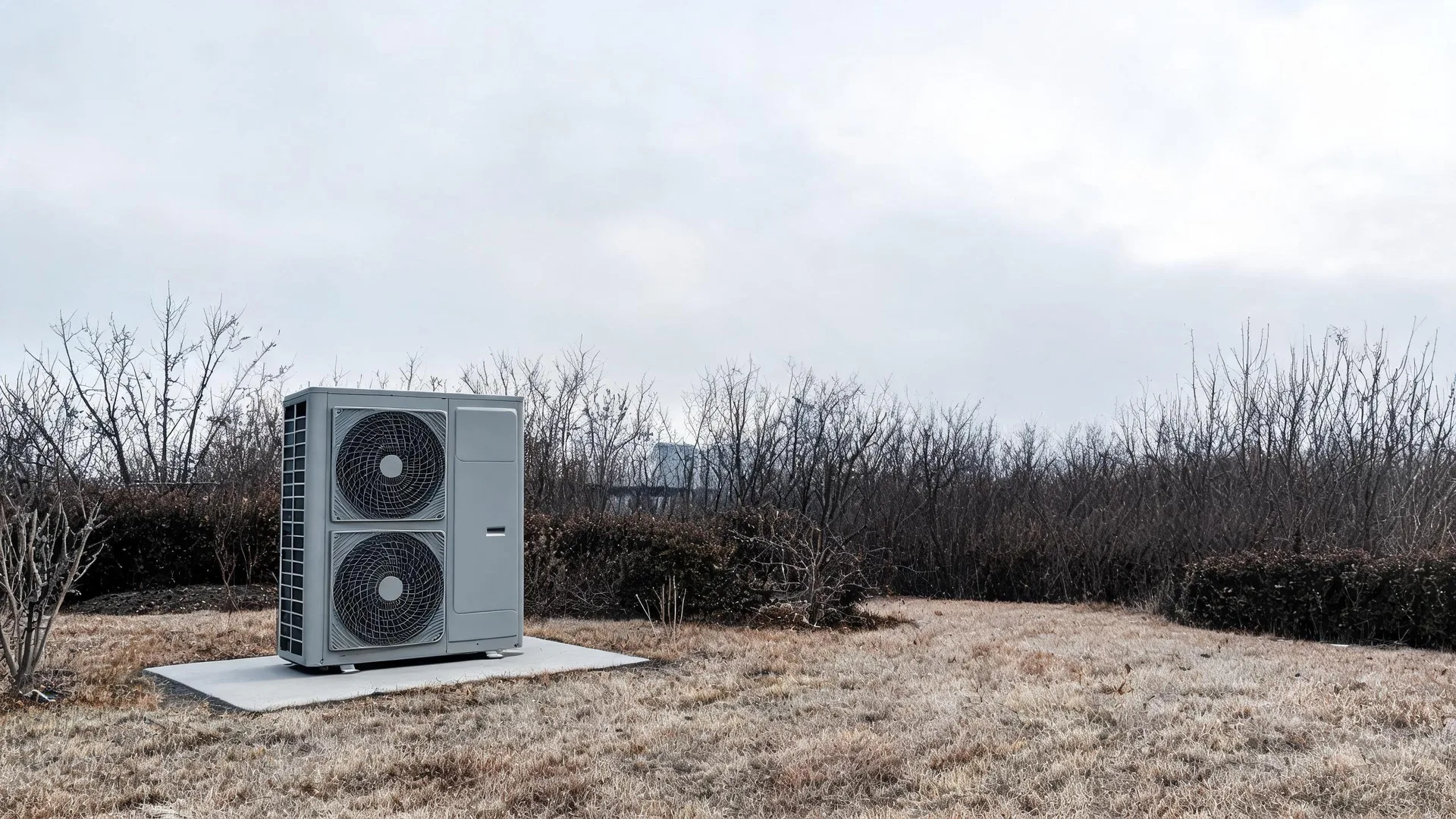
A gray air-source heat pump mounted on a concrete pad next to a house with gray vinyl siding, surrounded by gravel and flanked by green shrubs and white hydrangea flowers.

The rating is what it starts at, not what it stays at

The rating on the label is measured new, in a lab, with clean coils and a clean filter. That number doesn't hold steady for the life of the system. Dust on the coil, a dirty filter, low refrigerant charge, all of it pulls real performance below what's printed on the sticker. A heat pump that runs for months straight needs that upkeep to keep earning the number it was sold on. Skip it long enough and a high-efficiency unit starts working like a mediocre one, except you paid for the better rating.

Size drives cost more than brand does

A heat pump has to be sized to the house, the ductwork, and the windows and walls that lose heat. That takes a load calculation, room by room, not a guess based on square footage. Getting the size right costs more up front than eyeballing it, but an undersized unit runs constantly and an oversized one cycles on and off without ever running long enough to work efficiently.
The ductwork decides the job as much as the unit does

If the existing ducts are sized right and sealed well, a contractor can connect to them and move on. If they're leaky, undersized, or were built for a furnace that pushed air differently, they need rework before the new system can perform the way it's rated to. That part of the job is often harder to price than the unit sitting outside.

A load calculation looks at the walls, the windows, the ceiling height, which way the house faces, how much shade it gets, and adds all of it up room by room. Square footage alone skips most of that, which is why houses the same size on paper can need different sized systems. Go too small and the heat pump runs flat out on the coldest days and still can't keep up, so a backup heat source ends up carrying the load it was supposed to handle. Go too big and it short cycles, blasting the house to temperature and shutting off before it ever settles into a steady run, which is when a heat pump is actually efficient. Short cycling also means more starts and stops over the life of the unit, and the parts that wear are the parts that start and stop. The right size isn't the biggest one that fits the budget. It's the one matched to how fast this specific house loses heat and gains it back.

Installation day starts with setting the outdoor unit on its pad and mounting the indoor coil, then running the line set between them. That line gets brazed, pressure tested for leaks, and pulled down to a vacuum before any refrigerant goes in. If the ductwork is being reused, a contractor checks it for leaks and proper airflow first, since a gap that never bothered the old furnace can choke a heat pump. Once everything is connected, the system gets charged to the exact weight the manufacturer calls for, not just run until the air feels cold. The last part is commissioning. That means checking airflow at the vents, checking the temperature split across the coil, and setting the thermostat so the heat pump runs the way it was designed to instead of handing the load to backup heat every time it gets cold. Skip that step and the system can look finished while it runs wrong for years.