





An outdoor heat pump unit mounted on a concrete pad in front of a two-story suburban house.

Heat Pump Installation in Hagerstown, MD

Tell us about the job

Takes about a minute. No obligation.

New system or replacementHeat PumpWashington County, MD
Step 1 of 2

What ZIP code is the job in?

Washington County gets its share of rough weather, including damaging wind, hail, and the occasional winter storm with heavy snow or ice. None of that calls for an oversized heat pump or a special setup. A unit sized correctly for your home handles wind, cold snaps and summer heat the same way it would anywhere else. What's worth planning for instead is the power going out. A heat pump does nothing for you while the grid is down, and outages aren't rare around here. That's a separate conversation from sizing, worth having with whoever installs it.

7 months
October through April, your system heats
3 months
June through August, it cools
25°F
the average winter night it heats against
85°F
the average summer afternoon it cools against
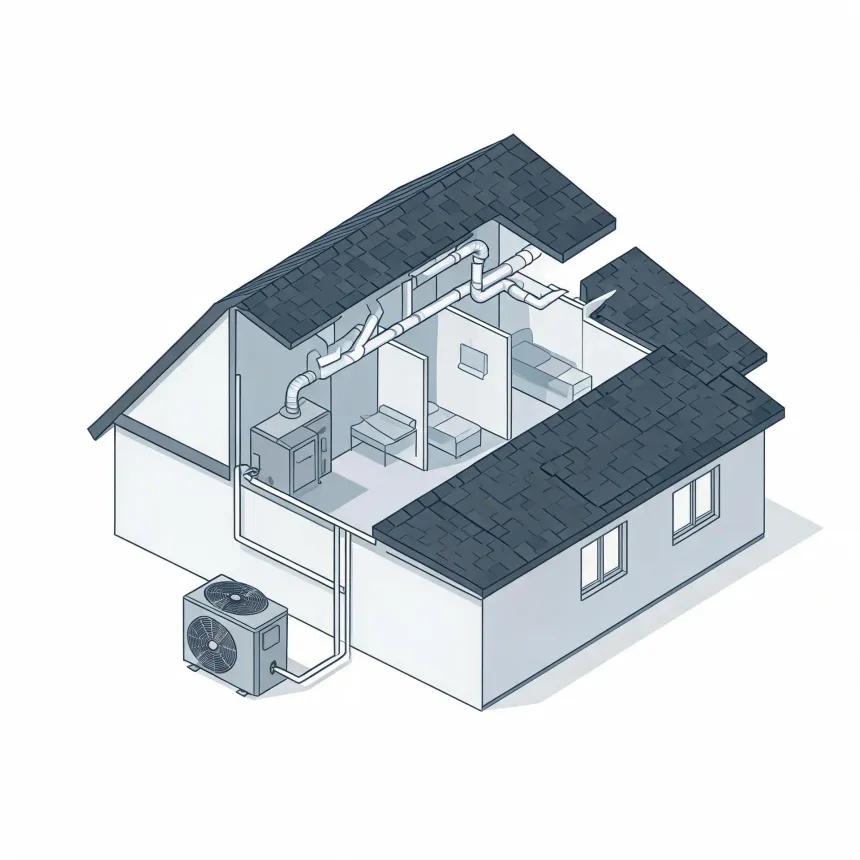
Isometric line illustration of a cutaway single-story house showing interior ductwork, an indoor air handler unit, and an outdoor condenser connected by refrigerant lines, with a dark shingled roof.
Your system heats October through April and cools June through August.

NOAA nClimDiv, 1991–2020 normals

More than half the homes in Washington County already heat with electricity.

Replacing an electric furnace or baseboard setup with a heat pump keeps the same fuel, so the wiring already in place is a known starting point.

Old or new, this county calls for a standard heat pump

Half the homes here were built by 1974
148 damaging wind events from 2015 to 2024
31 hail events from 2015 to 2024

Zone 4A means a real heating load and a real cooling load, not one or the other. A heat pump sized for Washington County only needs to match your home, same as it would in any 4A county. Winters here average in the mid-20s overnight, which is well within what a standard heat pump is built to handle, and summers call for cooling that any correctly sized unit delivers without strain. There's no local quirk that pushes the sizing one way or the other. Whoever does the load calculation is looking at your house, your insulation, your windows, not the county.

The efficiency floor is already set. See what meets it in your home.

Any heat pump installed here now has to hit 14.3 SEER2 and 7.5 HSPF2 at minimum, so efficiency isn't something you have to ask for. A federal tax credit is available on top of that for units that qualify. Get a quote and you'll see what fits your home at that standard.

Find a contractor
A man in a cap, dark shirt and tan work pants carries a worn canvas tool bag up porch steps toward a dark blue front door, with a potted shrub beside the entry.
A residential heat pump outdoor unit mounted on a concrete pad next to a house with gray vinyl siding.

Seven months of heat start in October

Heat here runs October through April, about seven months straight once it starts. That's the stretch this unit has to carry the house through, day and night, on whatever setup goes in now. Get it installed before October and it's running on a system that's already settled in, not one still being adjusted while the first cold nights hit. September is worth marking on the calendar for that reason.

The old equipment comes out

Whoever installs the new heat pump disconnects and removes the old furnace, baseboard units, or existing heat pump, along with the thermostat and any line sets or ductwork that aren't being reused. A gas furnace also needs its gas line capped off properly, not just disconnected. None of this gets left behind for you to deal with later.

What this means for your install

Swapping an electric furnace or baseboard heat for a heat pump is mostly a straightforward changeover since the electrical infrastructure is already there. The installer still needs to check whether your panel has enough capacity for the new unit and whether any existing ductwork needs modification to work with a heat pump instead of resistance heat.

A heat pump that's too big cycles on, satisfies the thermostat fast, and shuts off again before it's pulled any moisture out of the air. In summer that leaves the house feeling clammy even at the right temperature. One that's too small runs constantly during the coldest stretches and never quite catches up. Either way the equipment wears faster, short cycling on mild days or straining for hours on cold ones. Getting it right starts with a room by room look at the house. The installer checks wall and window area, which way each room faces, how well it's insulated, how much air leaks in and out. That calculation is what tells them which size unit actually matches the house, not a guess based on square footage alone.

Installation day starts with the old system coming out and the new outdoor and indoor units going in, but most of the day goes to the parts you don't see. The installer runs new electrical circuits if the panel needs it, sets the refrigerant lines, and connects the thermostat wiring. Once the equipment is in place, the lines get pressure tested for leaks before any refrigerant goes in. Then comes the charge, weighed in to the manufacturer's spec, not just run until the gauges look right. The last part is airflow. The installer checks static pressure in the ductwork and adjusts the blower settings so the system moves the amount of air it was designed to move. A heat pump that's low on charge or starved for airflow will still turn on and blow air, but it won't heat or cool the way it should, and that won't show up until the first hard freeze or the first real heat.