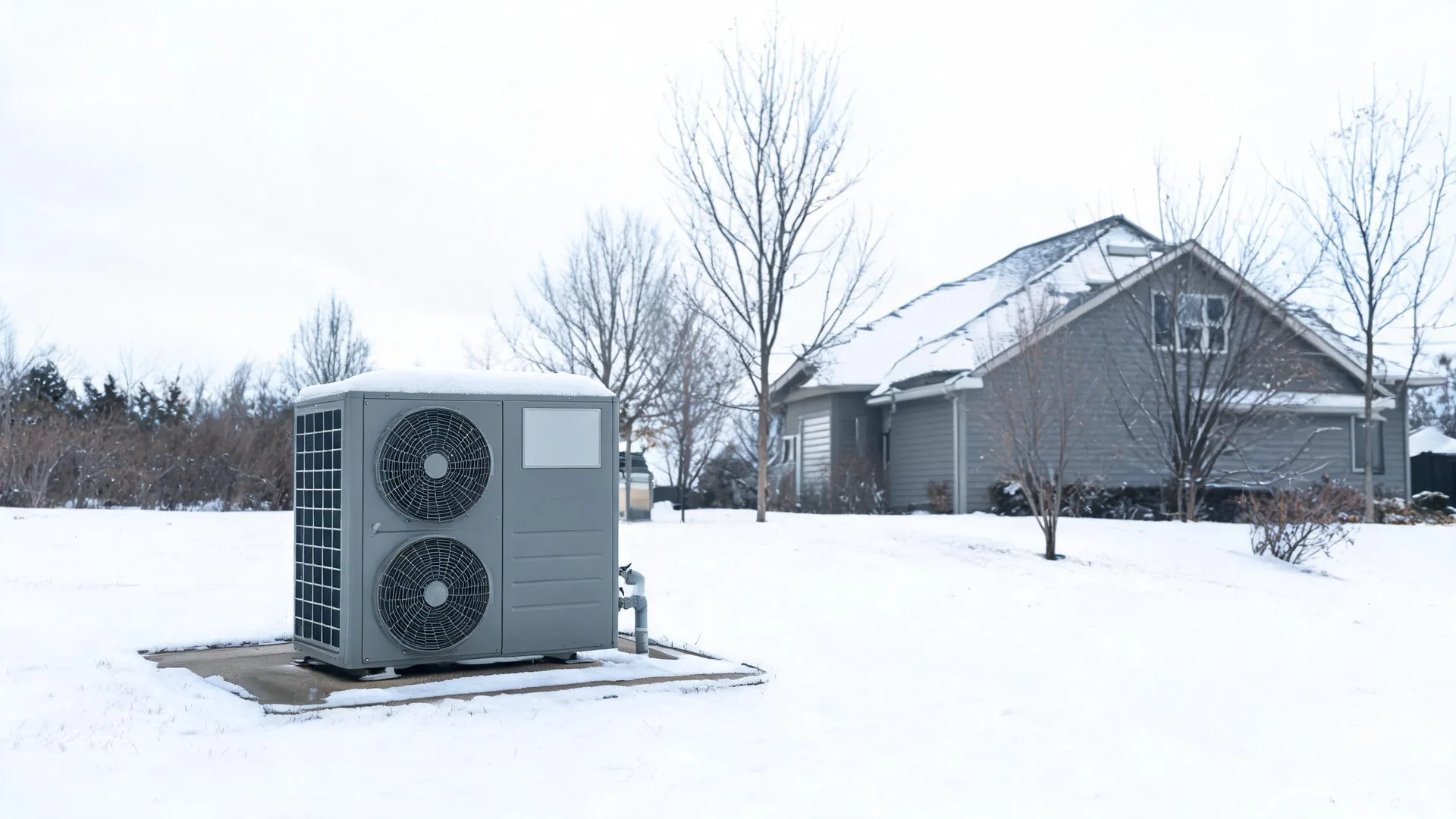
Electricity here runs 17.86 cents a kilowatt-hour
Maryland households paid that rate in 2024, higher than a lot of the country. A heat pump in Easton runs on that rate every time it heats or cools the house.
Takes about a minute. No obligation.
Maryland households paid that rate in 2024, higher than a lot of the country. A heat pump in Easton runs on that rate every time it heats or cools the house.
Since the rate per kilowatt-hour isn't something you can change, the difference between a well-matched heat pump and a poor fit shows up on every bill after it's installed. Sizing and installation quality decide how many kilowatt-hours it takes to heat or cool this house.

NOAA nClimDiv, 1991–2020 normals
A heat pump has to be sized to the house, not picked off a chart by square footage alone.
Get the size wrong and you pay for it on every bill, not just on install day.



Heat here runs October through April, about seven months. September is the month before that starts, and it's the better time to put in a heat pump. Installed then, it gets to run on mild days first, both heating and cooling, while anyone can still notice if something needs adjusting. Wait until October and the first cold night is also the first real test. Sizing a heat pump right can take a visit or two, sometimes a follow-up after it's run a few cycles. That only happens before the house needs the heat, not after.
Any heat pump installed here now has to meet 14.3 SEER2 and 7.5 HSPF2, the federal minimum as of 2023. That's the floor, not a special order, so a contractor pricing this job is already working from it. Zone 4A asks real work of both sides of the system, heating and cooling, which is part of why that minimum exists. A system that clears it can also qualify for the federal tax credit.
Find a contractorWhatever is heating and cooling the house now does not get reused once the heat pump goes in. If it is a furnace paired with a separate air conditioner, both come out, since the heat pump takes over both jobs. The old ductwork usually stays, but a contractor should check it before assuming it will work as is. A system that was sized for an old furnace and a separate AC was never matched to the way a heat pump moves heat, so the ducts are worth a second look rather than a guess. Whoever removes the old equipment also has to deal with the refrigerant in the old AC coil, which by law has to be recovered, not vented. If the old system ran on gas, that line gets capped off, not left live. None of this is optional work tacked onto the job. It is part of taking out one system and putting in another that runs on different rules.
The right size comes from a room by room load calculation, the kind that accounts for windows, insulation, ceiling height and which way the house faces. Houses the same size can need different tonnage. A contractor who skips this and sizes off square footage alone is guessing, and a guess either way shows up in how the system runs.
A heat pump that's too big cools the house fast, then shuts off before it pulls the moisture out of the air, leaving it cold and clammy. One that's too small runs constantly on the coldest and hottest days and still can't keep up. Both wear the system down faster, just in opposite ways.
The SEER2 and HSPF2 numbers on the label are a ratio, not a guarantee. They measure how much heat the system moves for the electricity it uses, tested under set conditions in a lab. Run that same system against a bad duct run or the wrong refrigerant charge and it will burn more power than the label promises, because the rating describes the equipment, not the installation. A house set up right can run a heat pump for less than a house with the same equipment set up wrong. That's why the rating is a starting point for comparing one system to another, not a promise about what any house will actually use. A higher rated system installed poorly can lose to a lower rated one installed well.
Install day starts with the equipment going in, but most of the day goes to what connects it. The outdoor unit and the air handler get set in place, then the refrigerant lines between them get run, brazed and pressure tested before anything gets charged. That pressure test matters more than it sounds. A line set that leaks slow can run fine for months and then fail right when the system is working hardest. Once the lines check out, the refrigerant goes in, and it has to be weighed in to the amount that system calls for, not just run until the pressure looks right. The electrical hookup is its own step, since a heat pump draws differently than whatever it's replacing and the disconnect and breaker get checked against it. Only after all of that gets tested does anyone turn to the thermostat and walk through how the system actually runs.