




White colonial houses with lit windows photographed at dusk along a tree-lined residential street.

Heat Pump Installation in Dundalk, MD

Tell us about the job

Takes about a minute. No obligation.

New system or replacementHeat PumpBaltimore County, MD
Step 1 of 2

What ZIP code is the job in?

Electricity in Maryland ran 17.86 cents per kilowatthour in 2024. A heat pump runs on electricity for both heating and cooling, so that rate applies to your system all year. The difference between one heat pump and another shows up on every bill that follows. A unit sized right for your home and installed well earns back the gap in efficiency over one that costs less to buy but more to run.

7 months
October through April, your system heats
4 months
June through September, it cools
26°F
the average winter night it heats against
85°F
the average summer afternoon it cools against
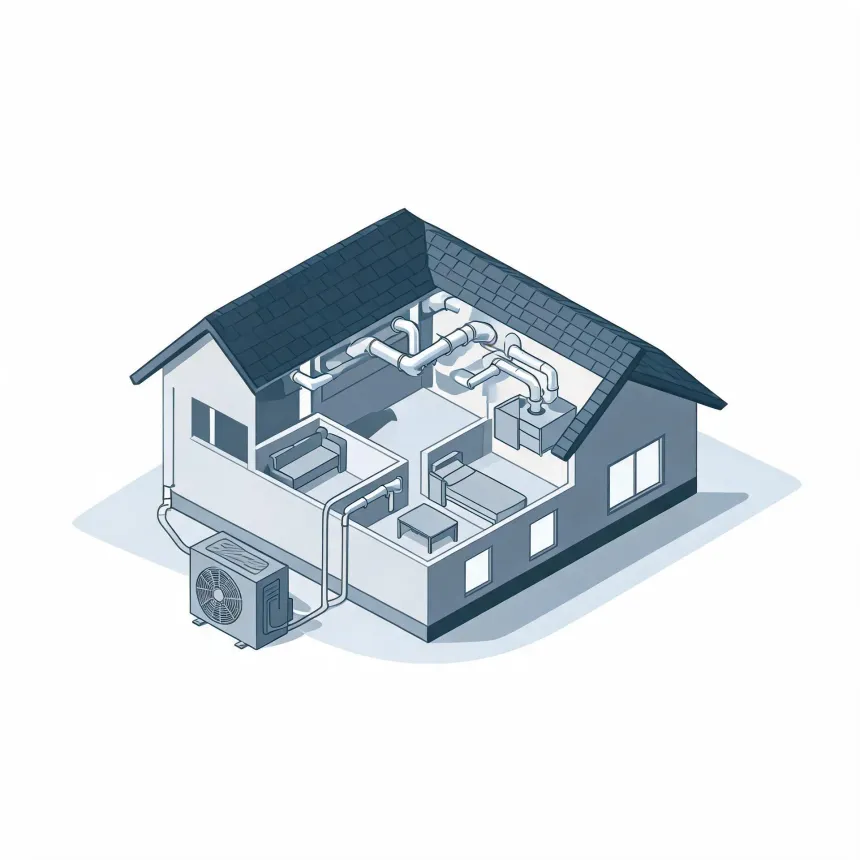
Isometric cutaway illustration of a house showing attic ductwork, an indoor air handler, furnished rooms, and an outdoor condenser unit connected by lines along the exterior wall.
Your system heats October through April and cools June through September.

NOAA nClimDiv, 1991–2020 normals

Gas heats just over half of Baltimore County homes.

A heat pump in Dundalk is usually going in alongside that gas furnace or in place of it, not into a house already wired for electric heat.

Half the homes in Dundalk were built by 1973, and a heat pump has to work with the house it's going into

Half the homes here were built by 1973
314 damaging wind events from 2015 to 2024
45 hail events from 2015 to 2024

Heat pumps here run most of the year, heating October through April and cooling June through September. That leaves a narrow window to get one installed without the pressure of a system already struggling to keep up. Put it in before September and it's ready for the first cold morning, with time beforehand to size it right and sort out any startup issues. Wait for that first cold snap and you're choosing in a hurry, often with whatever unit can be gotten in fastest. The same logic holds for May, ahead of the cooling months. Installing in the month before the season starts means the work happens on your schedule, not the weather's.

A correctly sized heat pump is built for what Dundalk winters and summers ask of it

Dundalk sits in a mixed climate zone, one that asks real work of both heating and cooling. That's normal for this area, not a reason to size up. A heat pump built for standard efficiency and matched to your home's heating and cooling load will handle it. Get the sizing right at installation and the unit runs the way it's meant to, winter and summer both.

Find a contractor
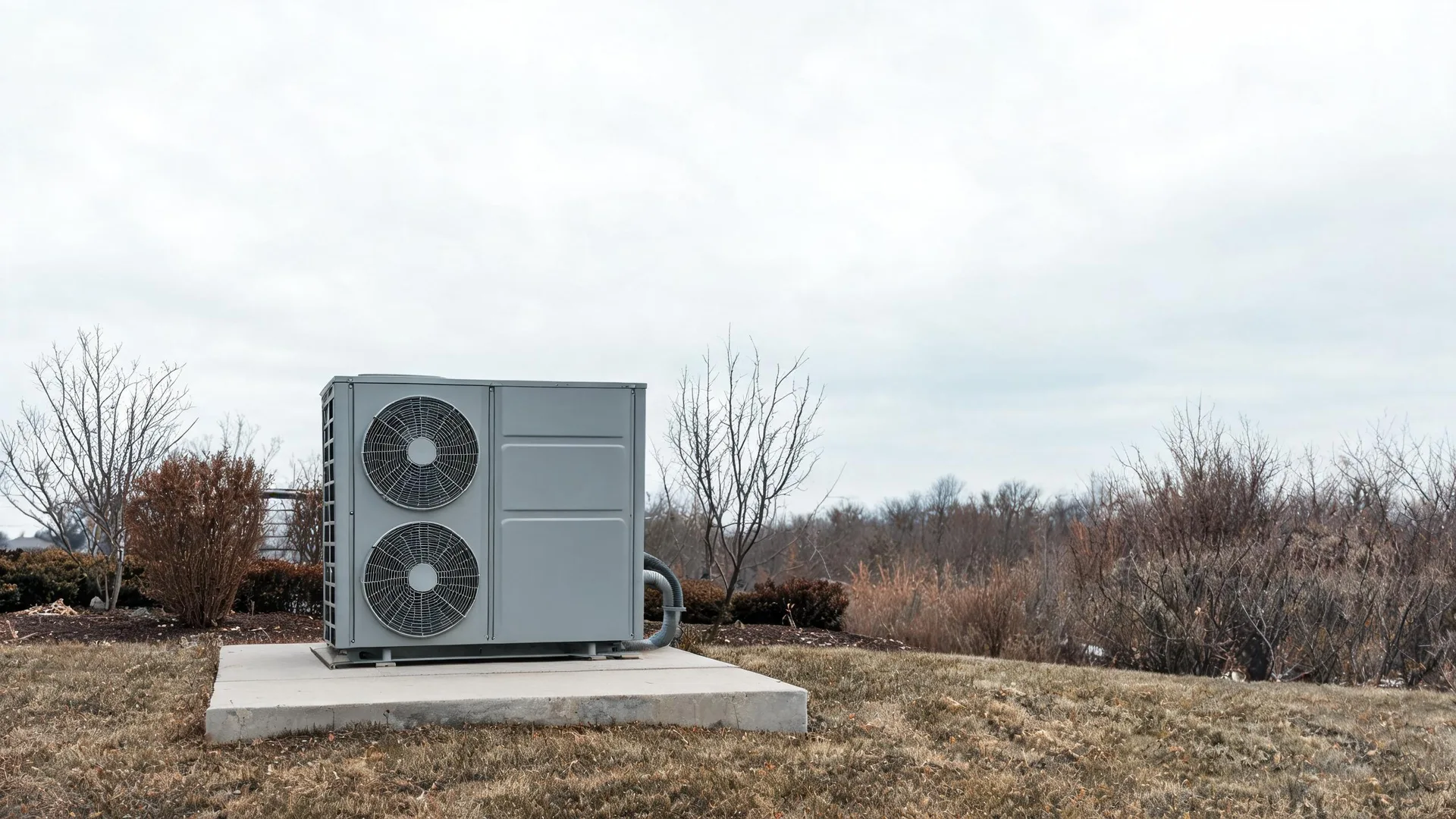
A gray heat pump outdoor unit mounted on a concrete pad next to a residential house with lap siding and stone accents.

It runs all year, so ask about the part that runs all year

A heat pump runs every day of the year, not just on the coldest or hottest ones. That constant duty cycle is why the compressor matters more here than on any other part. Ask what compressor is in each system and whether it's a variable-speed or a single-stage unit. A variable-speed compressor ramps up and down to match the load, which means less wear than a unit that only knows on and off. Ask too about the defrost cycle, since a heat pump pulls heat from outside air even in cold weather and needs to clear frost off the outdoor coil to keep working. A poorly designed defrost cycle run too often wastes energy, and run too rarely leaves ice built up on the coil. Ask how the system handles the lowest temperatures it will see, and whether it needs backup heat to get through them. Some heat pumps lean on electric resistance heat as a backup, and that backup can run a lot if the heat pump itself isn't sized or matched correctly. Ask about the warranty on the compressor specifically, not just the system as a whole, since that's the part doing the work on every single day the system runs.

The old system doesn't have to come out first

If a gas furnace is already in place, a heat pump can often be installed alongside it rather than ripping it out. That setup lets the furnace serve as backup heat on the coldest days while the heat pump handles the rest of the year. The furnace stays connected to the same ductwork, and a control decides which one fires based on outdoor temperature.
If it's being removed, that's its own job

Taking out an old furnace or air conditioner means disconnecting gas lines, electrical whips, and refrigerant lines safely, not just unbolting the cabinet. Refrigerant in an old AC unit has to be recovered properly, not vented. That work happens as part of the installation, so it gets scheduled and priced along with putting the new system in, not treated as an afterthought.

A heat pump that's too big cools the house fast, shuts off, and starts again a few minutes later. That short cycling never runs long enough to pull moisture out of the air, so the house feels cool but damp. One that's too small runs flat out and still can't keep up when the temperature drops or climbs toward the edges of what it's rated for. Getting the size right means a contractor works out the home's heating and cooling load room by room, looking at square footage, window area, insulation, and air leakage rather than just matching whatever unit was there before. That load calculation is what tells you the right size, not the size of the old system or a guess based on the house next door.

Installation day starts with the outdoor unit and the indoor coil going in, then the line set gets run between them and connected. Those lines get cut to length, brazed, and pressure tested before any refrigerant goes in. A joint that leaks slowly will go unnoticed for a long time if that test gets skipped. The electrical side is its own step. That means a dedicated circuit sized for the new unit, a disconnect installed within sight of the outdoor unit, and a control wire run to the thermostat. Once everything is connected, the system gets charged with refrigerant to the exact weight the manufacturer specifies, not just until the air coming out feels cold. That charge gets checked against the outdoor temperature at the time, since the same pressure reading means something different on a cold day than on a warm one. Airflow gets checked last, at the vents themselves, to confirm the ductwork is actually delivering what the new unit is pushing out.