






A two-story red brick house with black shutters and a dark roof sits behind a mown lawn, large deciduous trees, and a dry-stacked stone wall in the foreground.

Heat Pump Installation in Denton, MD

Tell us about the job

Takes about a minute. No obligation.

New system or replacementHeat PumpCaroline County, MD
Step 1 of 2

What ZIP code is the job in?

Electricity in Maryland runs 17.86 cents per kilowatt-hour. A heat pump pulls on that rate every time it runs, and in Denton that's most of the year. The difference between an efficient unit and a middling one shows up every billing cycle, not just in a brochure. Before you settle on a model, check its efficiency rating against what you're replacing. At this electric rate, that number follows you home.

7 months
October through April, your system heats
4 months
June through September, it cools
28°F
the average winter night it heats against
86°F
the average summer afternoon it cools against
Isometric cutaway illustration of a single-story house showing interior ductwork, an indoor air handler and furnace unit, and an outdoor condenser connected by a line, on a white background.
Your system heats October through April and cools June through September.

NOAA nClimDiv, 1991–2020 normals

Electricity already heats 57.6% of homes in Caroline County, more than gas, oil and propane combined.

A heat pump replacing electric heat is swapping one electric system for another, not asking a house to change how it runs.

September and May are when Denton homeowners get ahead of the season, not caught by it

Cooling runs June through September
Heat runs October through April
75 damaging wind events from 2015 to 2024
A winter that doesn't ask muchOvernight lows in Caroline County average 28°F in December, January and February. A heat pump here isn't fighting single digits.

Denton falls in climate zone 4A, which asks real work of both sides of a heat pump, the heating and the cooling. Any split-system heat pump installed now has to meet 14.3 SEER2 and 7.5 HSPF2 at minimum. That's not a target to aim for, it's the floor. Units below it can't be sold for this install. A federal tax credit is available on top of that for equipment that qualifies, worth checking against whatever model a contractor quotes you.

Check the rating before you buy, not after the first bill

That 17.86 cent rate isn't going away. Checking the efficiency rating against this electric rate is the one step that pays you back on every bill after installation, not just the first one.

Find a contractor
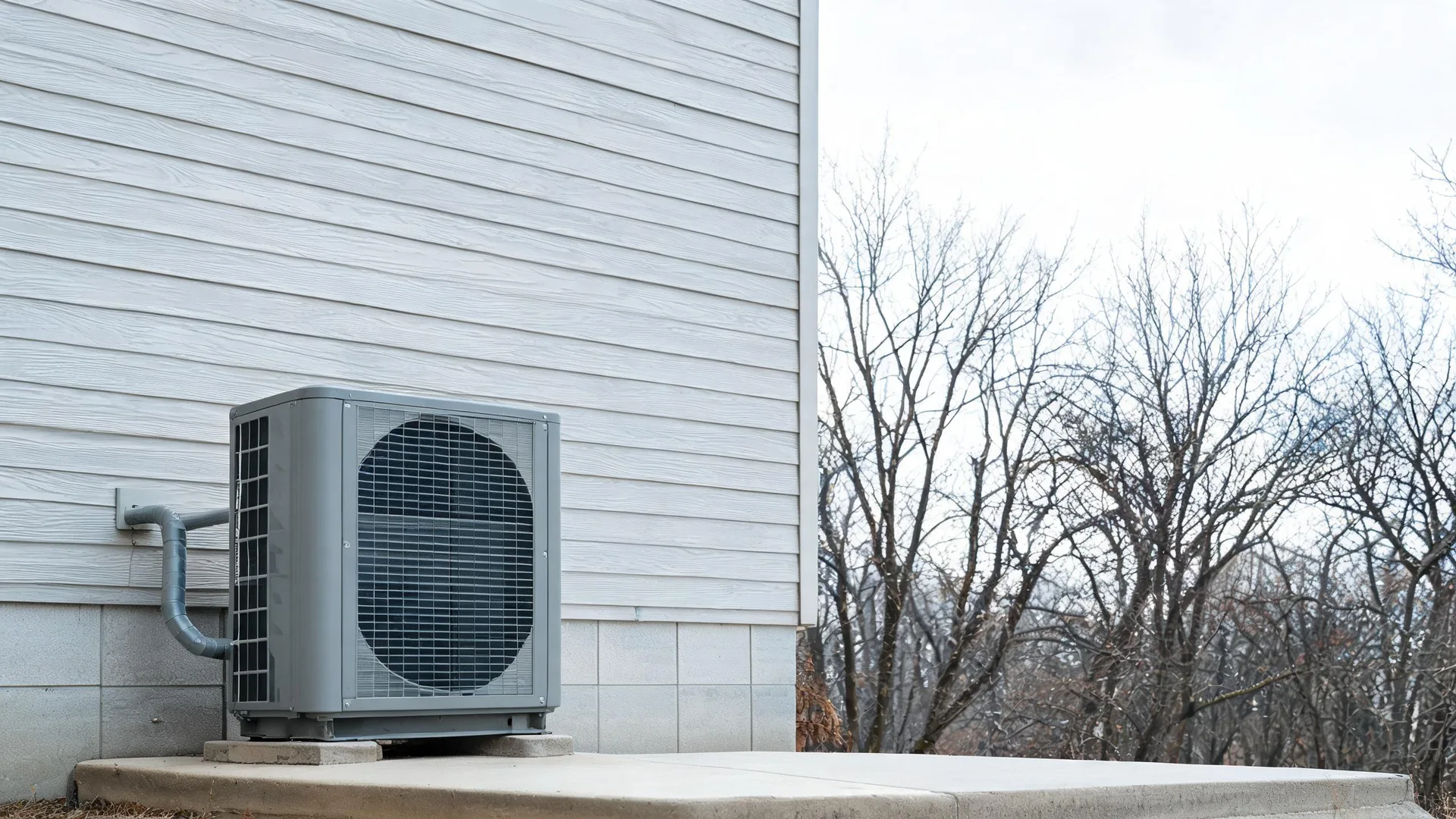
A gray outdoor HVAC unit mounted on a concrete pad beside a house with gray lap siding and a stone foundation.

Not fighting single digits means not wearing out early either

A 28°F average low doesn't put a heat pump through the kind of strain that shortens equipment life. The compressor isn't cycling against single-digit air for weeks at a stretch, which is where a lot of wear comes from in colder places. That's reason enough to pick a straightforward single-stage or two-stage unit over the top-tier variable-speed model, as long as it's sized right for the house. What makes a heat pump last here is less about the badge on the unit and more about installation done properly, and the money saved by not chasing the top efficiency number can go toward that instead.

The old equipment comes out

Whatever is being replaced, furnace, air conditioner or existing heat pump, gets disconnected and hauled away as part of the install. The refrigerant in an old system has to be recovered properly, not vented, so factor that step into the job even though it happens out of sight.
The ductwork usually stays

If the house already has ducts, a heat pump installation typically reuses them rather than replacing them. A contractor should still check that the existing ducts are sized right for the new unit's airflow, since a heat pump moves air differently than some older furnaces did.

SEER2 and HSPF2 are ratios, not a fixed amount of comfort. SEER2 measures cooling output against the electricity put in over a season, HSPF2 does the same for heating. A higher number means the unit pulls more heating or cooling out of each bit of power it draws, nothing more. Units sitting side by side with the same rating on the label can still behave differently once installed, because the rating comes from a lab test, not your ductwork, your insulation or where the outdoor unit ends up sitting. It tells you how the equipment performs against itself, not what your bill will look like. Worth knowing before you buy, just know what the number is actually promising.

Installation day starts outside. The old outdoor unit gets disconnected, the refrigerant lines get opened, and the new unit gets set on its pad or bracket and leveled. Inside, the air handler or coil gets swapped and connected back into the ductwork. The lines between inside and outside get run, pressure tested, then evacuated to pull out moisture and air before any refrigerant goes in. Once the system is charged, the crew runs it through both modes, heating and cooling, checking the temperature split at the vents and the pressures on the gauges. Before anyone leaves, the thermostat gets programmed and someone should walk you through it, not just hand you the manual.