






A row of similar two-story houses with gray siding and dark shingled roofs stands behind a long white vinyl fence, with mown grass in the foreground and large trees behind.

Heat Pump Installation in Columbia, MD

Tell us about the job

Takes about a minute. No obligation.

New system or replacementHeat PumpHoward County, MD
Step 1 of 2

What ZIP code is the job in?

Maryland households paid 17.86 cents per kilowatt-hour in 2024, above what most of the country pays. A heat pump moves heat instead of burning fuel or running pure resistance heat, so it gets more warmth out of each kilowatt-hour than a furnace or electric baseboard does. In Columbia, where that electricity rate applies to every month the system runs, the difference between a well-matched heat pump and an oversized or poorly installed one shows up on the bill. Sizing it to the house and setting it up right is what makes the efficiency rating mean anything once it's running.

7 months
October through April, your system heats
4 months
June through September, it cools
26°F
the average winter night it heats against
85°F
the average summer afternoon it cools against
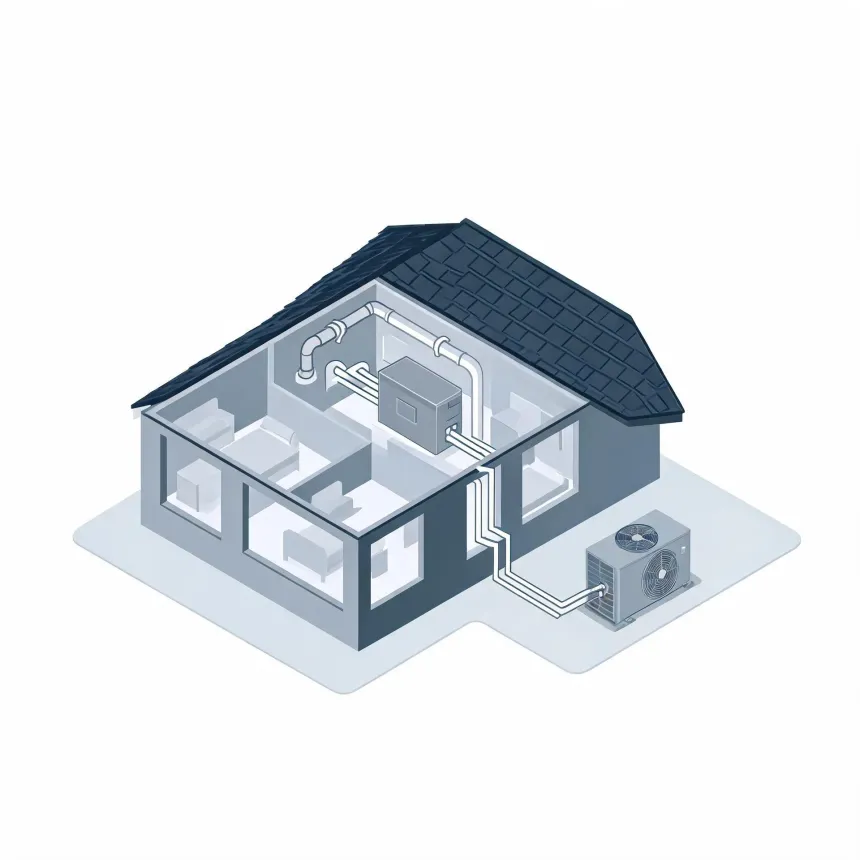
Isometric cutaway illustration of a gray house showing interior rooms, a central air handler with ducts in the attic, and refrigerant lines running to an outdoor condenser unit beside the building.
Your system heats October through April and cools June through September.

NOAA nClimDiv, 1991–2020 normals

Every heat pump has a rated output, but that number only holds up if the unit matches the house it's heating.

Ask for the load calculation, not just the equipment brand, since an oversized or undersized system will cost more to run no matter whose name is on it.

September gives you one month to get a heat pump in before heat season starts

Cooling runs June through September
Heat runs October through April
177 damaging wind events from 2015 to 2024
Most homes here already run on electric heatElectricity heats 49.9% of homes in Howard County, gas another 41.9%

Columbia sits in climate zone 4A, which asks real work of both heating and cooling here, and the equipment installed has to meet that. Any split-system heat pump made since the start of 2023 has to hit at least 14.3 SEER2 for cooling and 7.5 HSPF2 for heating. Those are federal floors, not local ones, but they're what you'll find on any unit sold here now. A system that clears them may still qualify for the federal tax credit, worth looking into before you settle on a model. The number on the spec sheet matters less than whether the installer sized the unit to your house in the first place.

This climate won't push a heat pump hard, so pick one that's built to last

Howard County asks real work of a heat pump in both directions, winter and summer, but it isn't storm damage or deep cold grinding on the equipment day to day. The overnight low in December, January and February averages 26°F. That's cold, but it's not the kind of extreme that pushes a system to its limits night after night. A heat pump sized right for this county doesn't have to fight hard to keep up, so the top-tier efficiency model isn't the only reasonable choice. A reliable system matched to your house will hold up fine here.

Find a contractor
A man in a dark work shirt, tan cargo pants and boots, seen from behind, climbs porch steps toward a navy front door while carrying a worn leather tool bag.
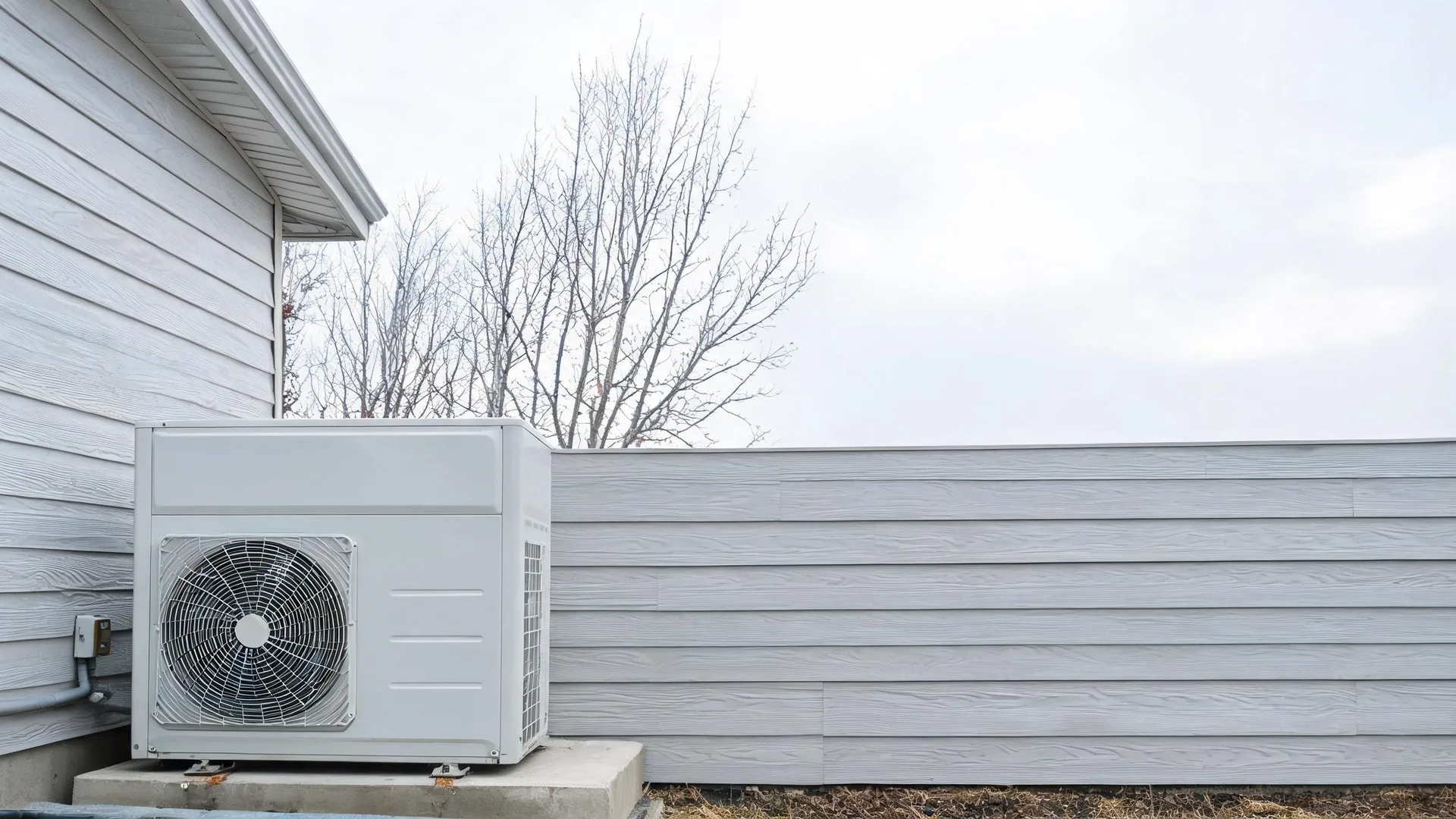
A residential heat pump outdoor unit mounted on a concrete pad next to a house with gray vinyl siding.

This system has an easy run here, year after year

Picked and installed right, a heat pump here runs for years before it needs anything more than routine service. It isn't fighting the cold or the heat hard enough, day after day, to wear down ahead of schedule. That's what the time-lapse above shows, the same unit cycling on through a full day without strain. Age and upkeep are what catch up with a system eventually, not this climate.

The rating is measured, not guaranteed

SEER2 and HSPF2 come from lab testing done under set conditions, with the refrigerant charge correct and the airflow where it should be. Your installed system gets that same number only if the charge is set right and the ductwork moves the air the unit was designed to move. Skip either step and the unit runs below its rating for as long as it's in the house.
One rating for cooling, another for heat

SEER2 tells you how the unit performs cooling the house. HSPF2 tells you how it performs heating it. A heat pump does both jobs with the same equipment, so look at both numbers rather than judging the whole system on one of them.

What you pay for comes down to a handful of things, and the equipment itself is only one. The load calculation takes real time, going room by room to work out how much heat the house loses and gains, and skipping it is how systems end up the wrong size. Running new line sets or modifying ductwork costs more than reusing what's there, and if the ducts are undersized for a heat pump's airflow needs, resizing them adds to the job. Where the outdoor unit sits and how far it is from the electrical panel affects how much wiring and refrigerant line the installer has to run. A system that needs a new circuit or a panel upgrade to handle the load costs more than one that doesn't. None of this shows up on the spec sheet, but all of it shows up in what the installer has to do to get the system running right.

Installation day starts before anyone touches the old equipment. The crew confirms the load calculation matches the equipment going in, then shuts down and recovers the refrigerant from the old system if one's coming out. The indoor air handler or coil gets set, the outdoor unit gets placed on its pad or bracket, and the line set runs between them. Electrical work comes next. That usually means a dedicated circuit, a disconnect box by the outdoor unit, and a whip to the air handler. Once everything's connected, the installer pulls a vacuum on the line set to clear out air and moisture before refrigerant ever goes in. Charging it right, checking airflow, and running the system through both heating and cooling modes is what tells the installer the job is done, not just the unit turning on.