





A row of white Colonial-style houses with glowing windows photographed at dusk along a road bordered by a stone wall.

Heat Pump Installation in Annapolis, MD

Tell us about the job

Takes about a minute. No obligation.

New system or replacementHeat PumpAnne Arundel County, MD
Step 1 of 2

What ZIP code is the job in?

Electricity in Maryland runs 17.86 cents per kilowatthour, above what most of the country pays. A heat pump moves heat instead of burning fuel for it, so that rate applies to nearly all the comfort your house uses, not just a water heater or a dryer. The efficiency rating on the unit you pick decides how many of those kilowatthours it takes to heat or cool a given room on a given day. Two systems can promise the same comfort and land on different monthly bills because of that rating alone. Worth asking your contractor to walk through the efficiency numbers on what they're proposing before you decide.

7 months
October through April, your system heats
4 months
June through September, it cools
29°F
the average winter night it heats against
86°F
the average summer afternoon it cools against
Isometric line illustration of a cutaway single-story building showing interior rooms, ceiling ductwork, an indoor air handler, and an outdoor condenser unit connected by refrigerant lines.
Your system heats October through April and cools June through September.

NOAA nClimDiv, 1991–2020 normals

Electricity heats half the homes in Anne Arundel County.

A heat pump runs on that same electricity, so most homes here already have the hookup it needs.

Annapolis weather doesn't call for an oversized system

248 damaging wind events from 2015 to 2024
22 hail events from 2015 to 2024
Power costs 17.86 cents a kWh statewide

Anne Arundel County sits in zone 4A, a mixed climate that asks real work of both your heating and your cooling. Any split-system heat pump installed here now has to meet 14.3 SEER2 for cooling and 7.5 HSPF2 for heating, the federal minimum as of January 2023. That's not a local rule, it's the floor everywhere, but it means the low-end units of a few years back are no longer on the table. If your new system also qualifies as higher efficiency, there's a federal tax credit available on top of what you pay. Ask your contractor which models on their truck clear that bar, and which ones clear it by a wide margin.

A right-sized heat pump is all this job calls for

A standard size, correctly sized for this zone, is enough. Nothing about Anne Arundel County asks you to pay for extra capacity or a higher tier than the job needs. Get the sizing and efficiency numbers in writing before you sign off.

Find a contractor
A gray heat pump outdoor unit mounted on a concrete pad next to a residential house with lap siding and stone accents.

What years of run time leave behind

Whatever is getting replaced has been cycling on and off for years, and that kind of run time wears specific parts, not the whole machine at once. A compressor that's been working a long time loses some of its capacity, so it runs longer to move the same heat, and that extra run time shows up as wear on everything downstream of it. Contactors pit, capacitors weaken, refrigerant lines develop slow leaks at the joints. None of that announces itself. A system can still blow air and still be costing more to run than it should, right up until the day it doesn't start. Pulling the old unit is also the only time anyone gets a real look at the line set and the pad it sat on, so a contractor worth hiring will check both before setting the new one down rather than just swapping box for box.

The sizing math sets the price before anyone picks a model

A contractor has to work out how much heat your house loses in winter and gains in summer before quoting anything, room by room, using the windows, the walls, and the ductwork you already have. That calculation decides the tonnage, and tonnage is most of the cost. Skipping it doesn't save you the step, it just means guessing, and a guessed system either runs constantly trying to keep up or short cycles because it's bigger than the job.
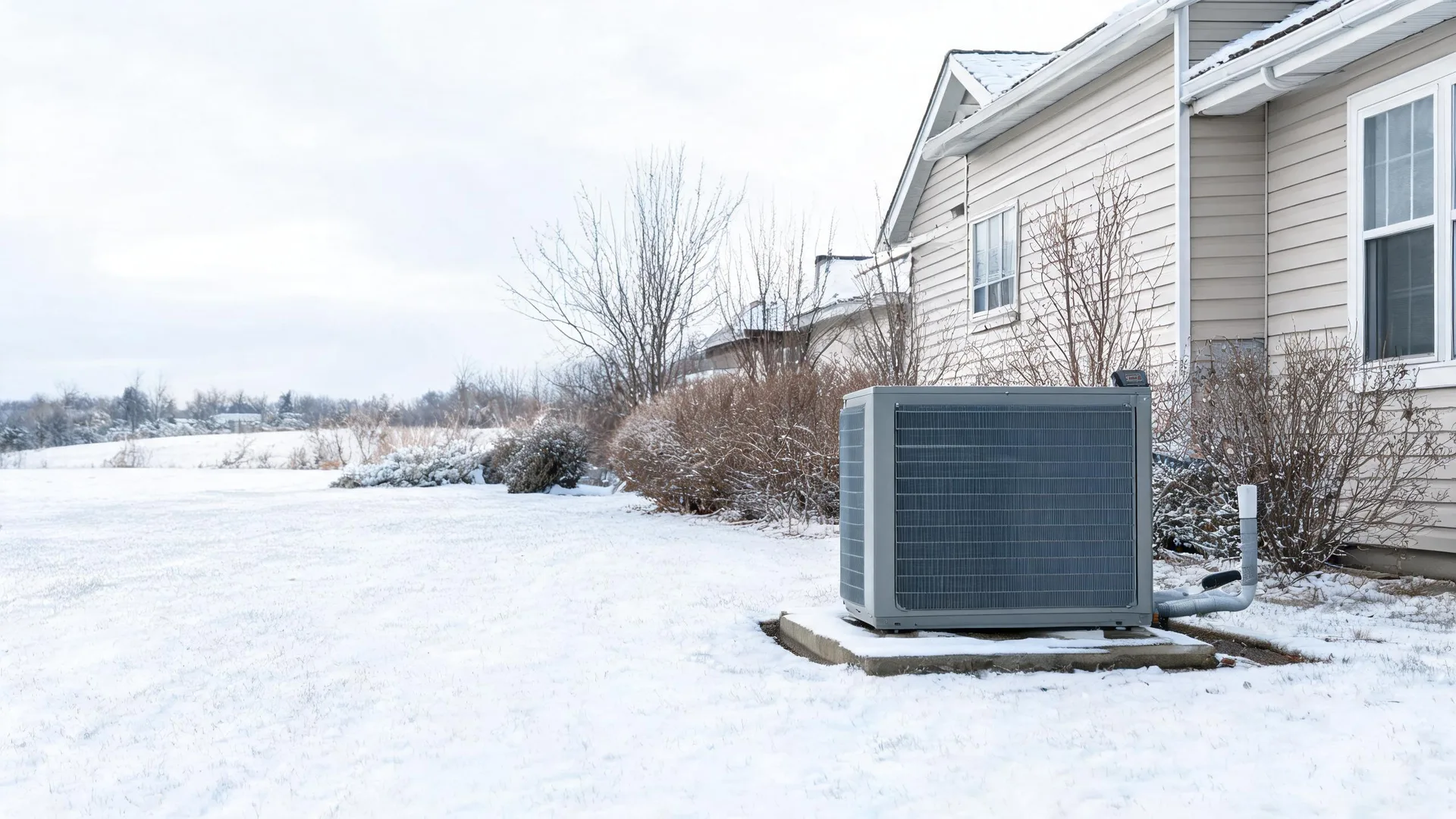
What's already at the house changes what the crew has to do

A heat pump needs a line set running between the outdoor unit and the indoor coil, a pad or bracket to sit on, and often an air handler or a change at the electrical panel to take the new load. If the ductwork already in place was sized for a different kind of system, it may need rework to move the right amount of air. None of that shows up until someone opens the walls or pulls the old equipment, so the quote reflects what the house needs, not just the unit on the truck.

Sizing a heat pump starts with a load calculation, not a nameplate on the old unit. A contractor measures the house, the windows, the insulation, the ductwork, and works out how fast it loses heat in the cold and gains it in the heat. That number, not habit or a guess at square footage, sets the tonnage. Go too big and the system blasts the house to temperature in a few minutes and shuts off, cycling on and off all day without ever running long enough to pull the moisture out of the air. Go too small and it runs constantly, straining to keep up on the coldest and hottest days, and the compressor wears faster for it. Right-sized, it runs long, steady cycles, which is exactly what keeps both the temperature and the humidity even.

Install day starts with the old equipment coming out, not the new one going in. The outdoor unit gets disconnected, the refrigerant recovered, and the indoor coil or air handler pulled before anything new goes on the pad. The line set gets checked, and replaced if it isn't rated for the new system. Reusing a line set that doesn't match will work against the new unit for as long as it runs. Once the new outdoor unit is set and leveled, the crew runs or reconnects the line set, wires in the new electrical connection, and sets the indoor coil or air handler in place. After that the whole refrigerant circuit gets pulled down under vacuum to clear out air and moisture before any refrigerant goes in. Either one left behind will damage the compressor over time. Only then does the system get charged, started up, and checked against the manufacturer's numbers for pressure and temperature, with the thermostat set up last.