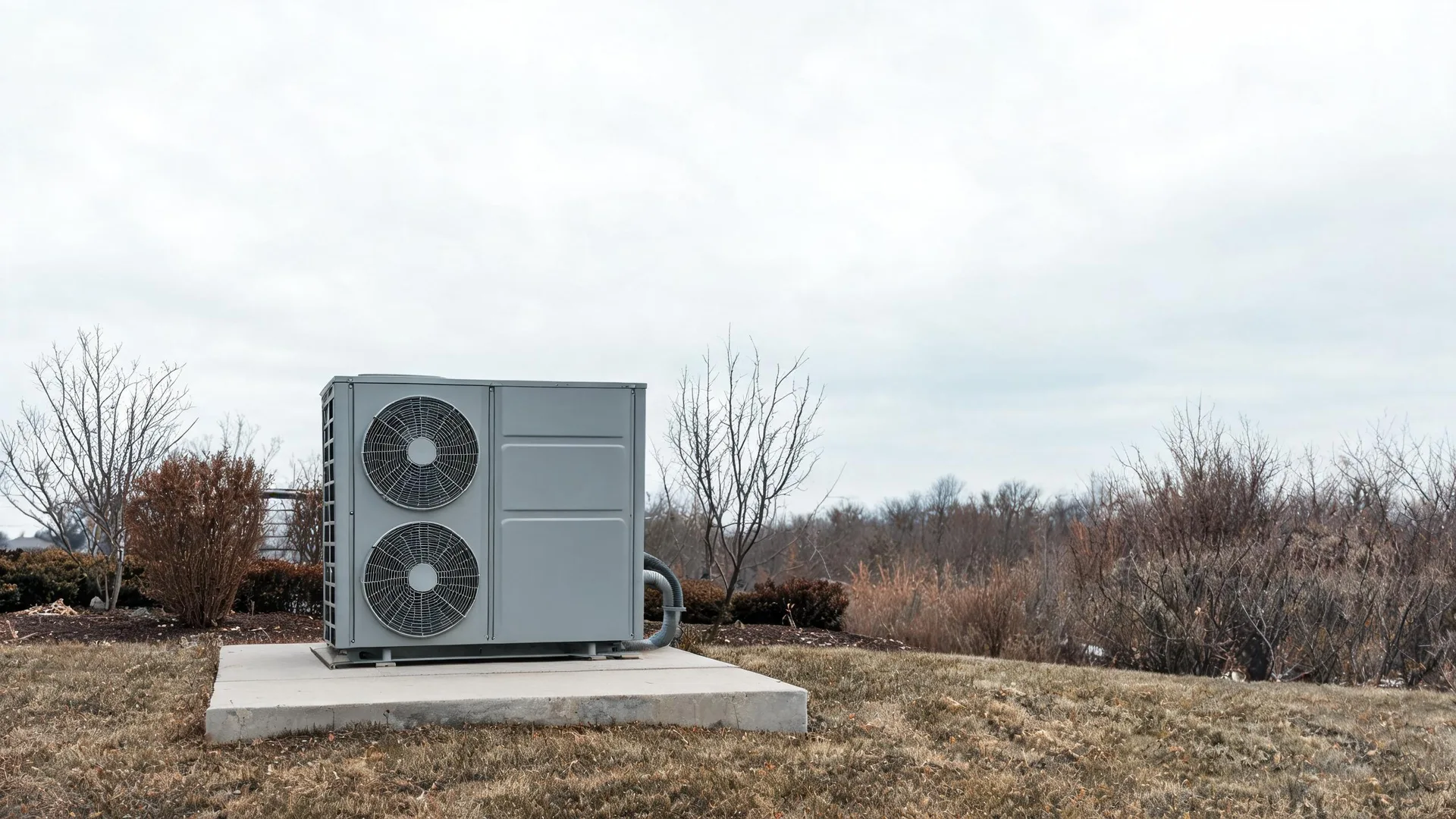
An outdoor air conditioning condenser unit mounted on a concrete pad in front of a single-story suburban house.

Heat Pump Installation in Aberdeen, MD

Tell us about the job

Takes about a minute. No obligation.

New system or replacementHeat PumpHarford County, MD
Step 1 of 2

What ZIP code is the job in?

Zone 4A sets the floor

Harford County falls under climate zone 4A, a mixed zone that asks real work of both heating and cooling. A split-system heat pump installed here has to meet 14.3 SEER2 for cooling and 7.5 HSPF2 for heating. That's a federal minimum, not a local add-on, so it narrows the field before you even start comparing models.


What this means for your install

A heat pump quoted for your home should already clear 14.3 SEER2 and 7.5 HSPF2. If a contractor proposes something below those numbers, it isn't legal to install new in Aberdeen. Ask to see the SEER2 and HSPF2 figures on the spec sheet for whatever system they're pricing out.

7 months
October through April, your system heats
4 months
June through September, it cools
26°F
the average winter night it heats against
85°F
the average summer afternoon it cools against
Isometric line illustration of a cutaway single-story house showing interior rooms with furniture and attic ductwork connected to an outdoor condenser unit beside the building.
Your system heats October through April and cools June through September.

NOAA nClimDiv, 1991–2020 normals

Electric heat already runs 42.3% of homes in Harford County, just ahead of gas at 39.1%.

A heat pump installed here fits the way most of your neighbors already heat their homes.

A heat pump here isn't fighting its environment

329 damaging wind events from 2015 to 2024
10 hail events from 2015 to 2024
24 winter storms from 2015 to 2024

Harford County logs plenty of rough weather, most of it wind, with a winter storm most years and the rare hail event or tropical storm passing through. None of that calls for a bigger heat pump or a pricier one. A unit sized to your home's heating and cooling load handles wind and ice the same as it handles a calm day, because what a heat pump responds to is temperature, not storms. What's worth planning for is the power going out, not the unit itself. Maryland households lost power for a day or more often enough in 2024 that a surge protector or a backup plan is the better place to put your attention.

Get it in before October, not during it

Heat here runs October through April, seven months of the year. A heat pump installed in September is tested and running before it has to carry a real load. One installed in October is learning the house while it's already heating it.

Find a contractor
A man in a faded olive work shirt and dark trousers climbs porch steps toward a navy front door, carrying a green canvas tool bag in his right hand, with a potted shrub in a blue planter beside the door.
A gray heat pump outdoor unit mounted on a concrete pad next to a residential house with lap siding and stone accents.

A system that isn't straining doesn't need the top shelf

Winter nights here average 26°F. That's a real load but not an extreme one, and summers in a mixed zone don't push a heat pump hard either. Between that and a home sized correctly to begin with, you're not buying for worst-case weather. Put your money into a unit that's sized right and installed well, not the highest SEER2 number on the lot.

The number is a season average, not a promise

SEER2 and HSPF2 get measured across a full range of conditions, mild days and hard ones averaged together. Your heat pump won't hold that exact number every hour it runs. It'll beat it on a mild afternoon and fall short on the coldest night. The rating tells you how the system performs over a whole season, not what any single moment looks like.

A higher number only pays off if the system fits the house

The rating describes the equipment, not the install. A high-SEER2 heat pump set on a duct system that's too small or too leaky will run worse than a lower-rated one installed right. Airflow, refrigerant charge and a load calculation done properly decide how close you get to the number on the sticker. The label is a starting point for comparing equipment, not a guarantee of what you'll see once it's running in your house.

Sizing a heat pump starts with a load calculation, a room-by-room count of how much heat a house loses in winter and gains in summer. Square footage alone doesn't tell you that. A contractor doing it right factors in windows, insulation levels, ceiling height and which way the house faces, then sizes the equipment to match what came out of that math. Too big and the unit short cycles, running in quick bursts that cool or heat the air but never run long enough to pull humidity out of it. Too small and it runs constantly on the hardest days, struggling to keep up and wearing itself out doing it. Either mistake shortens the life of the system. The right size is the one matched to the load calculation, not the one that sounds more powerful on paper.

Installation day starts with the old equipment coming out, not the new one going in. The outdoor unit gets disconnected, the line set gets drained of refrigerant, and if the indoor coil or air handler is being swapped too, that comes out next. Once the old system is clear, the crew checks the line set itself, the copper tubing running between indoor and outdoor units, to see whether it can be reused or needs replacing. Reusing a line set that's the wrong diameter for the new equipment causes problems later, so this is a step worth getting right rather than rushing. The new outdoor unit gets set on a pad, the indoor coil gets mounted, and the line set gets connected and sealed at both ends. Before anything gets powered on, the system gets pulled down to a vacuum to pull out moisture and air, because either one left behind damages the compressor over time. Only after that does a tech weigh in the refrigerant charge and run the system through its paces, checking airflow and temperatures to confirm it's doing what the load calculation said it should.